English
- English
- Español
- Português
- русский
- Français
- 日本語
- Deutsch
- tiếng Việt
- Italiano
- Nederlands
- ภาษาไทย
- Polski
- 한국어
- Svenska
- magyar
- Malay
- বাংলা ভাষার
- Dansk
- Suomi
- हिन्दी
- Pilipino
- Türkçe
- Gaeilge
- العربية
- Indonesia
- Norsk
- تمل
- český
- ελληνικά
- український
- Javanese
- فارسی
- தமிழ்
- తెలుగు
- नेपाली
- Burmese
- български
- ລາວ
- Latine
- Қазақша
- Euskal
- Azərbaycan
- Slovenský jazyk
- Македонски
- Lietuvos
- Eesti Keel
- Română
- Slovenski
- मराठी
- Srpski језик
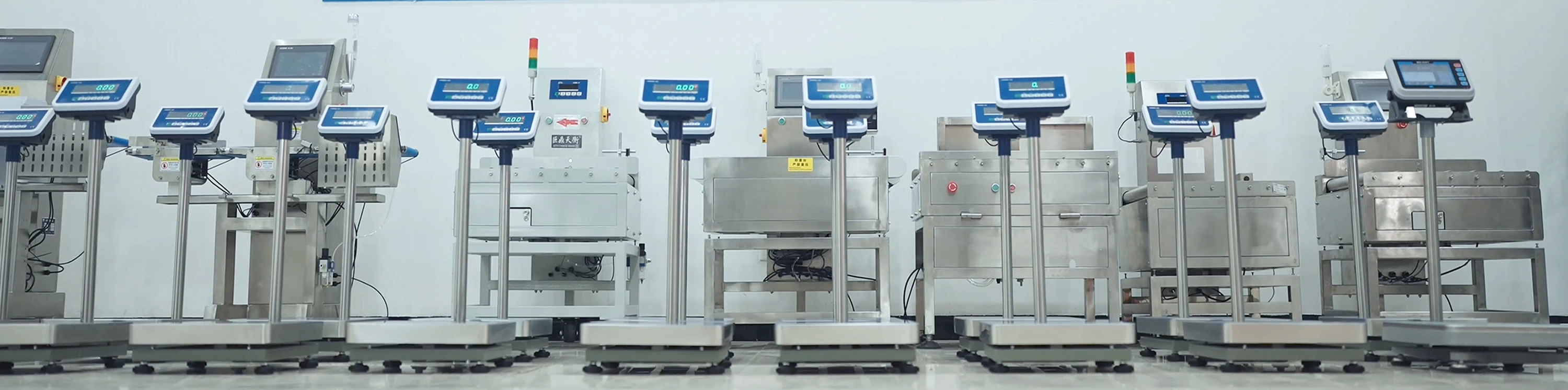
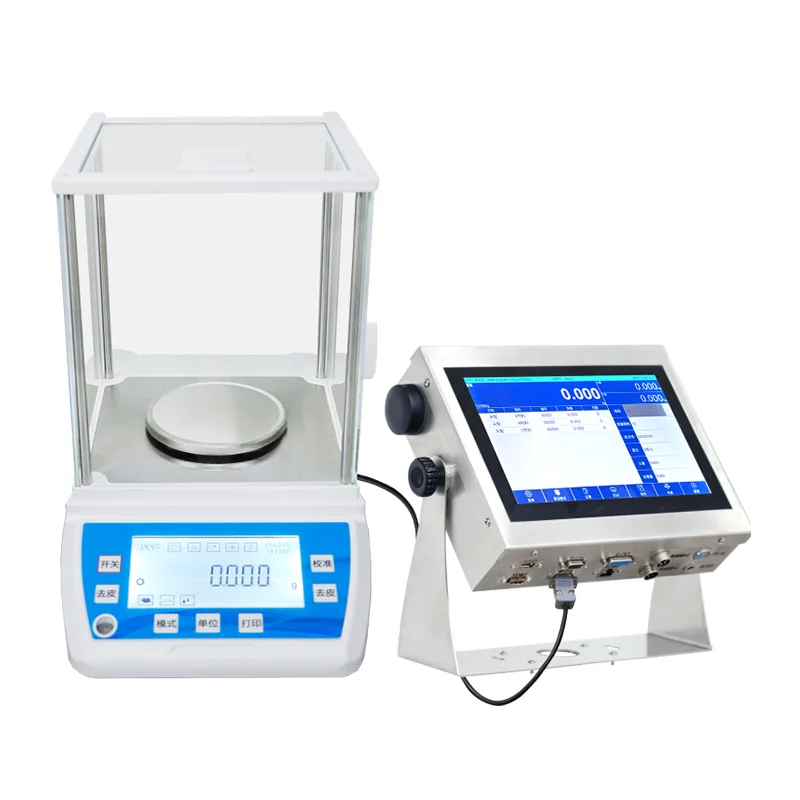
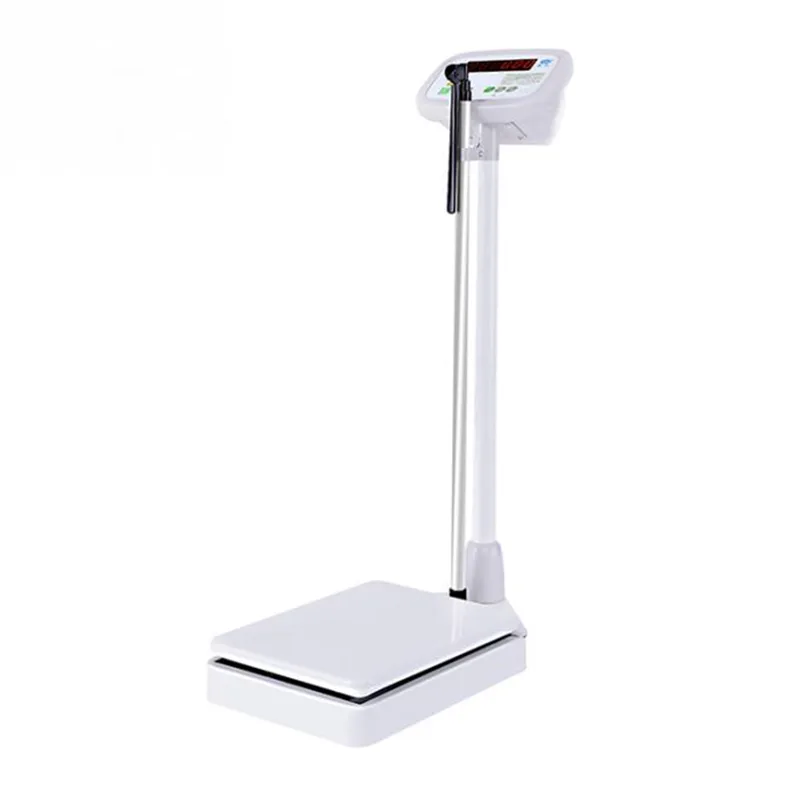
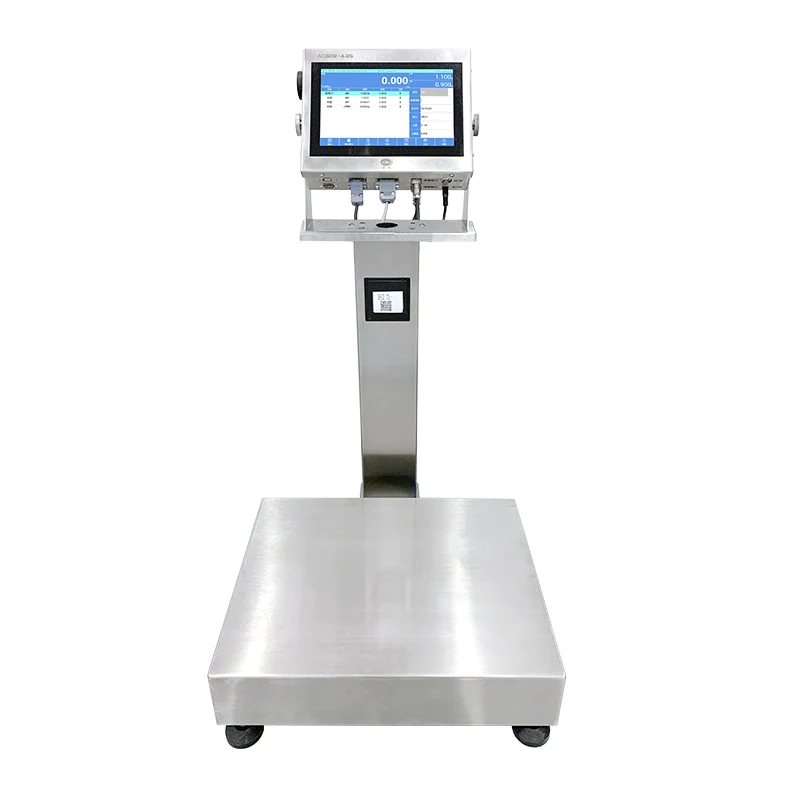
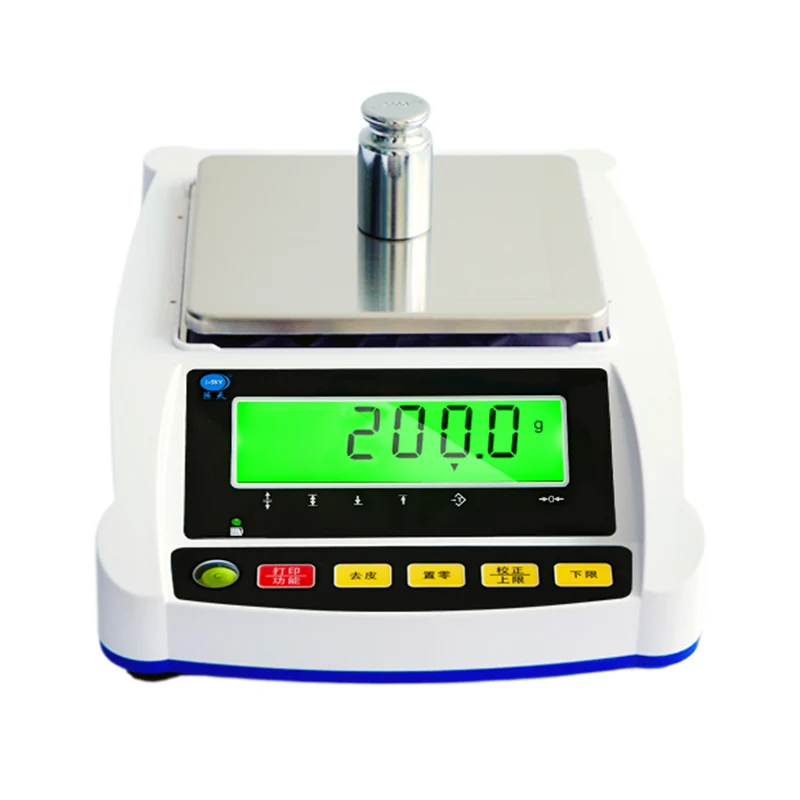
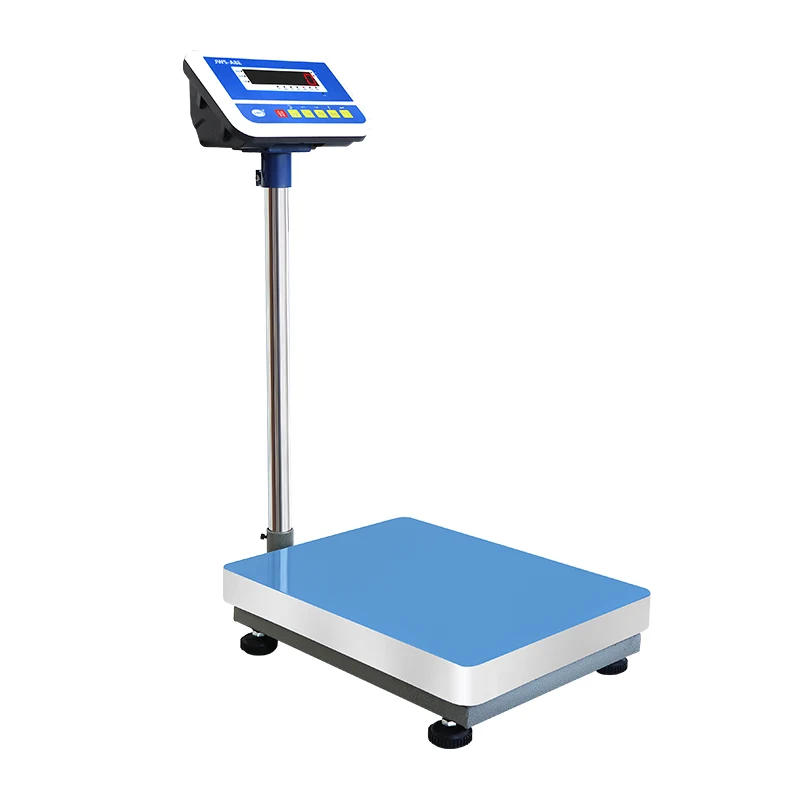
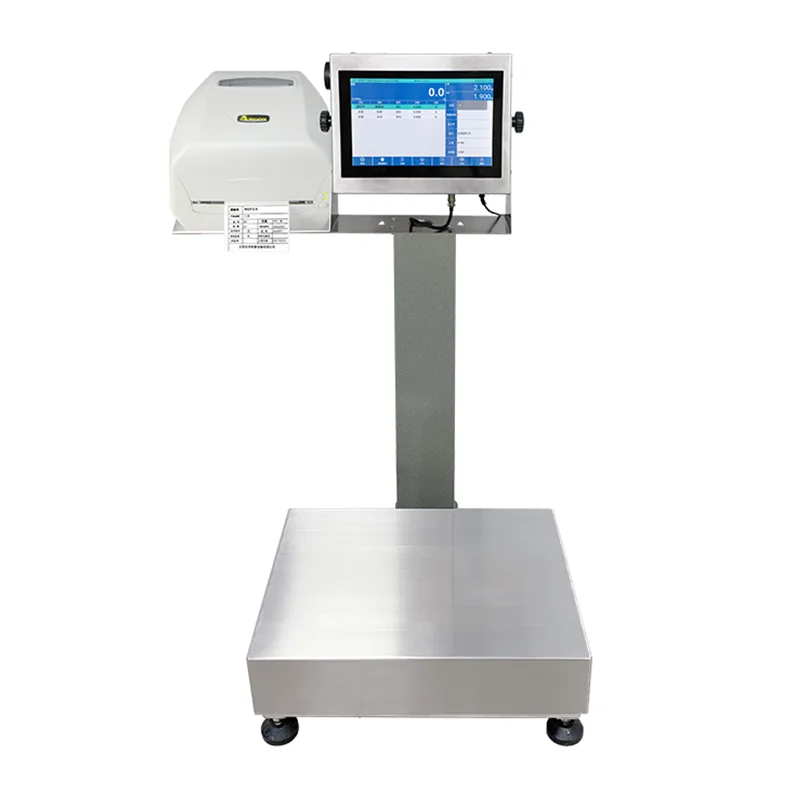
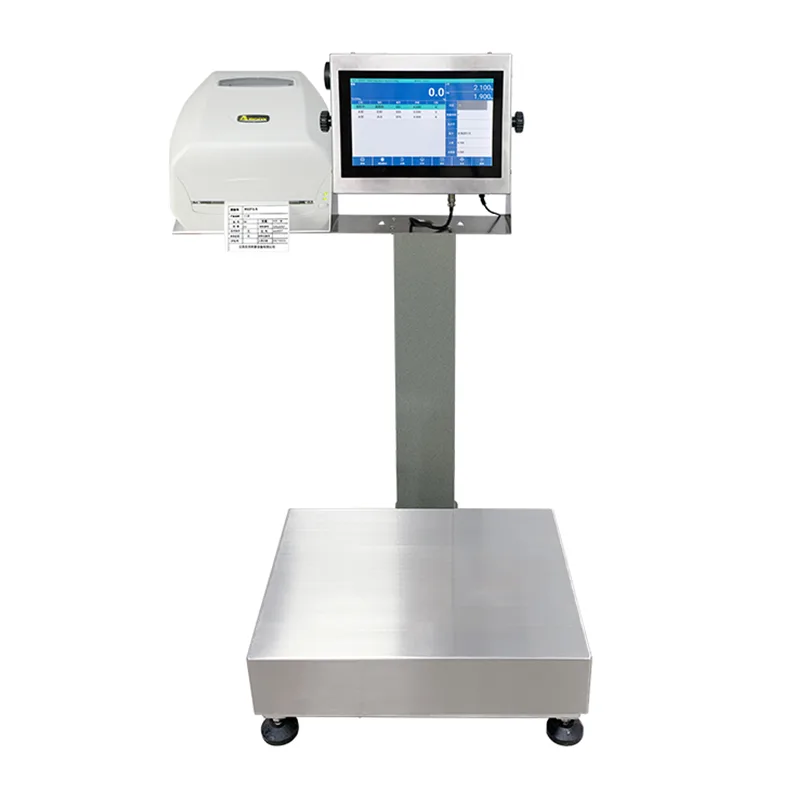
Intelligent Formula Scale with Automatic Formula Weighing Data Label Printing
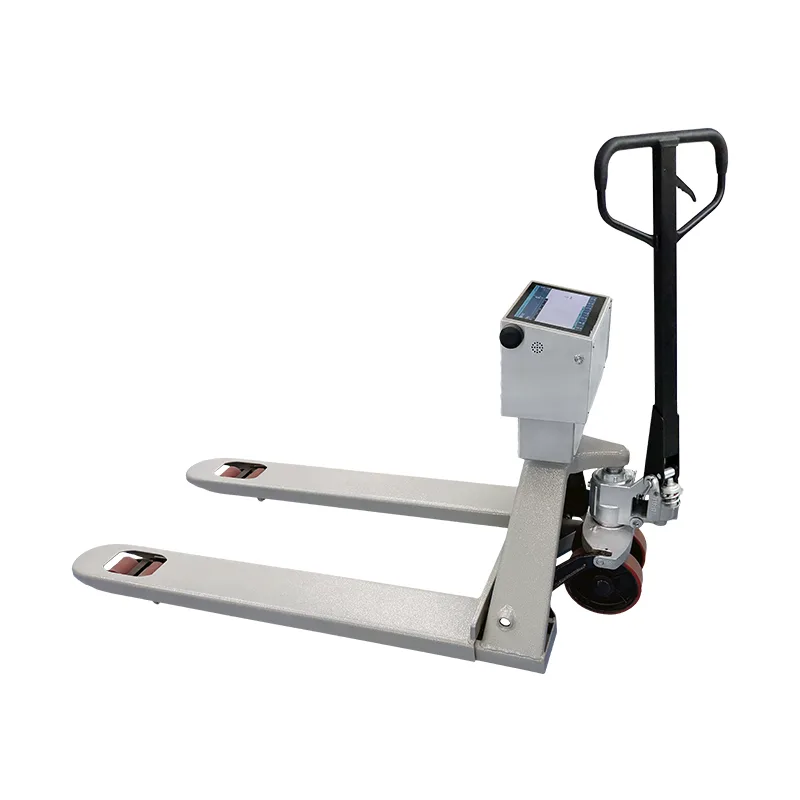
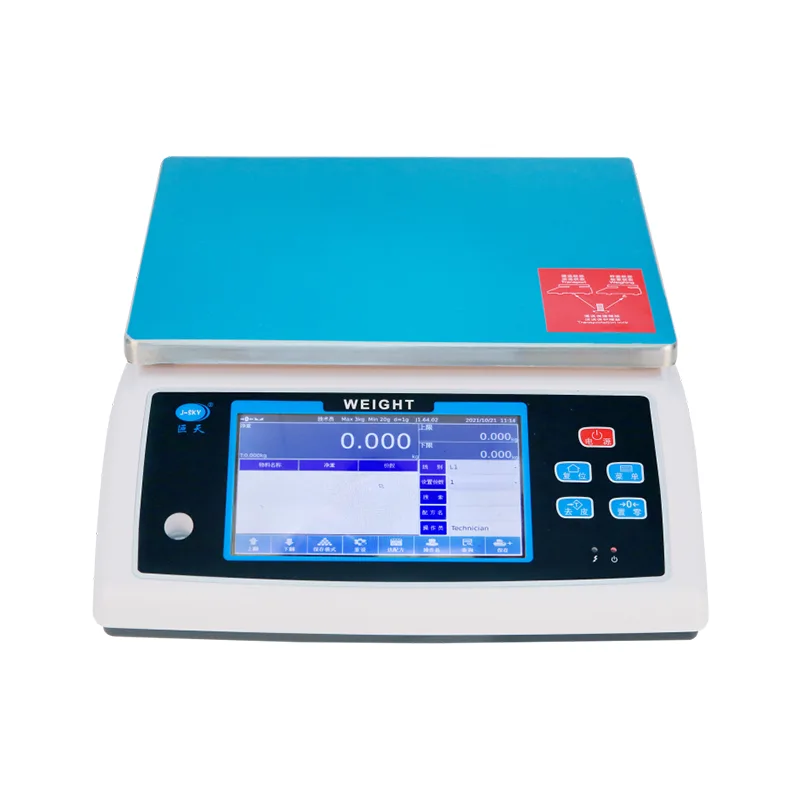
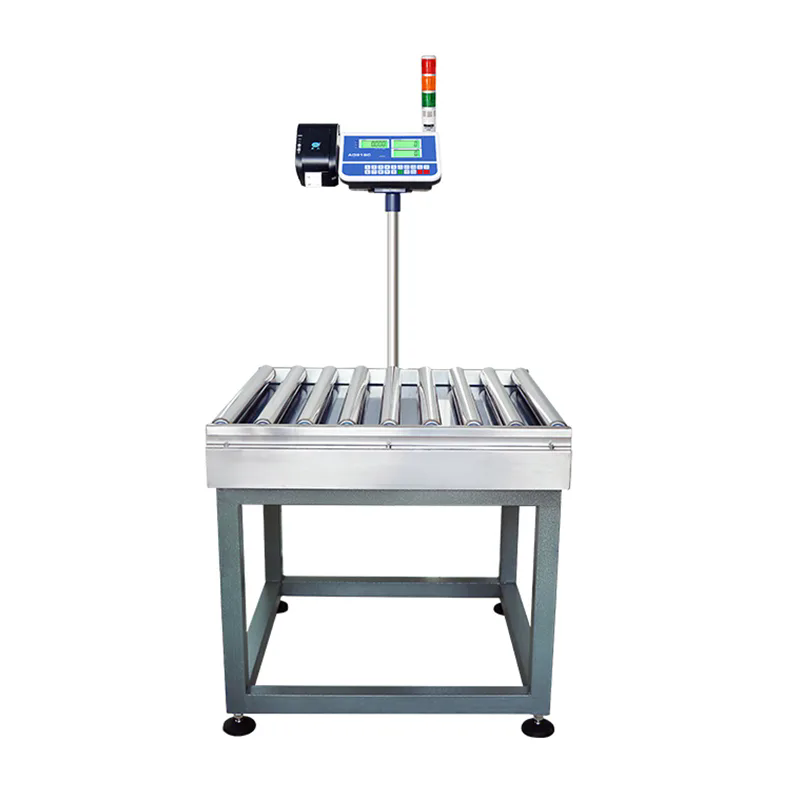
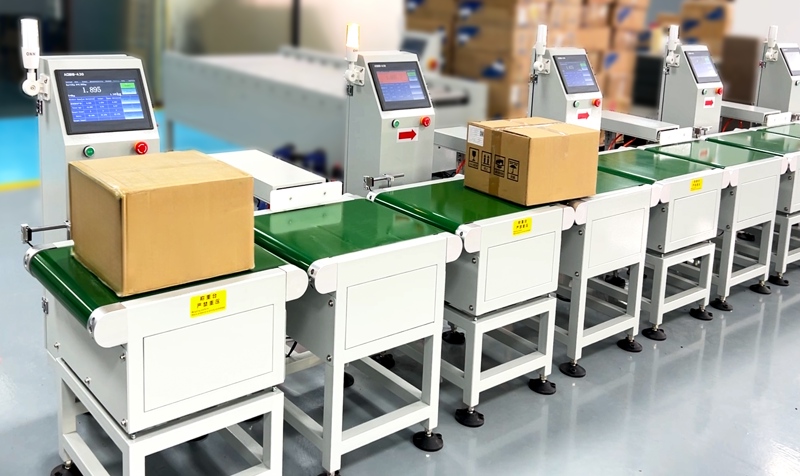
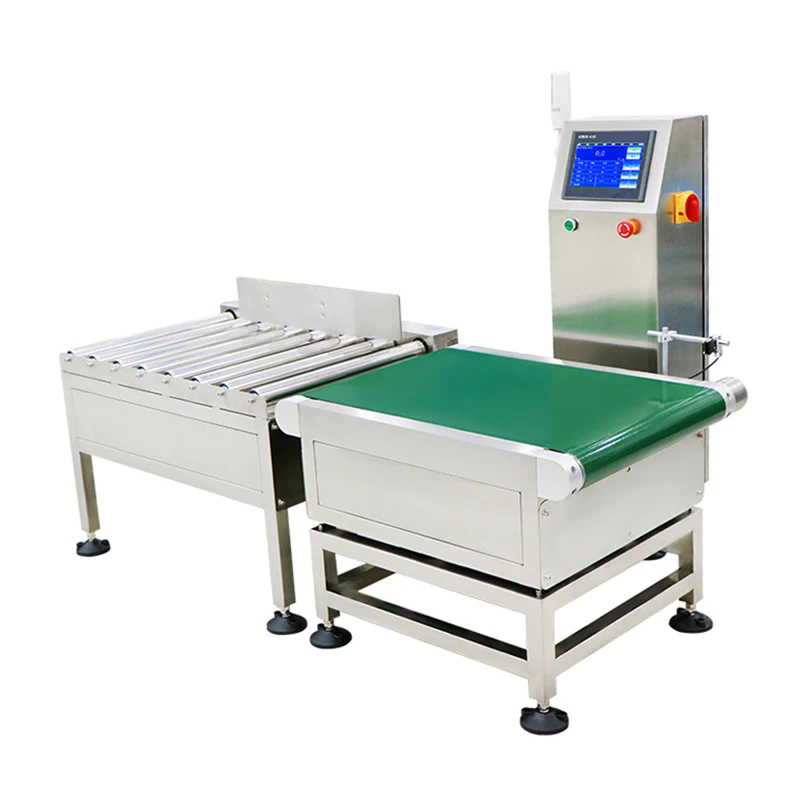
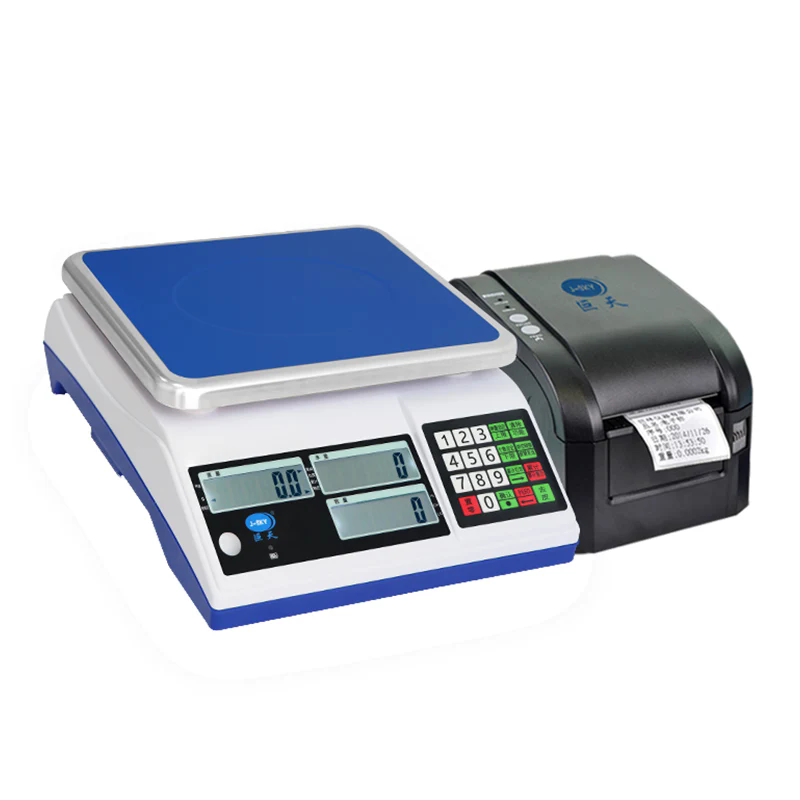
The intelligent formula scale enables automatic weighing and batching, with customized batching program design that supports single-material measurement, multi-material measurement, and mixed powder-liquid batching. The Intelligent Formula Scale with Automatic Formula Weighing Data Label Printing system boasts powerful functions and supports custom program development. As the source manufacturer of intelligent formula scales, Jutian offers preferential prices for bulk purchases.
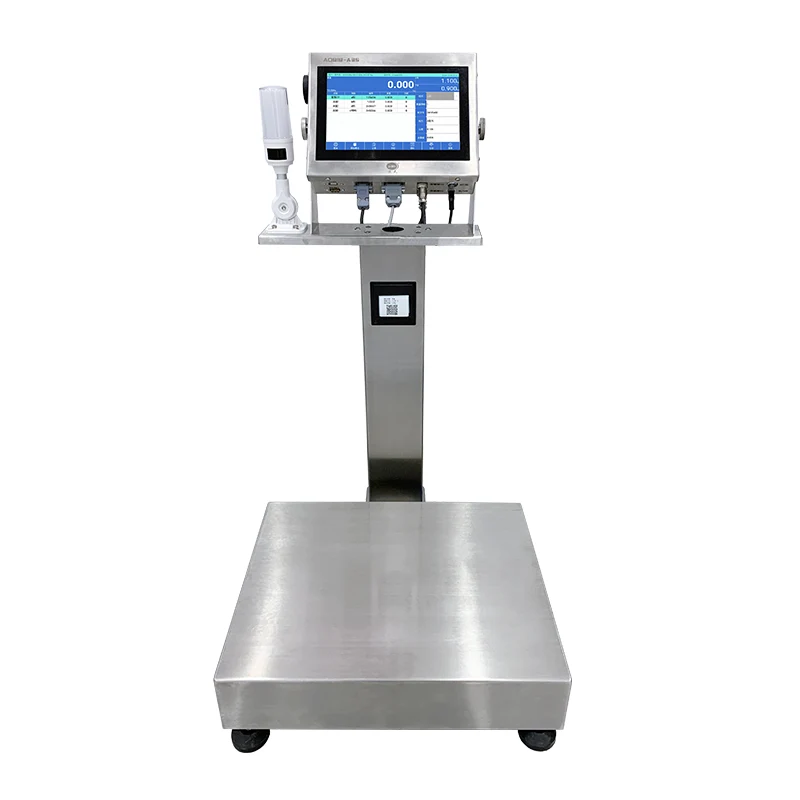
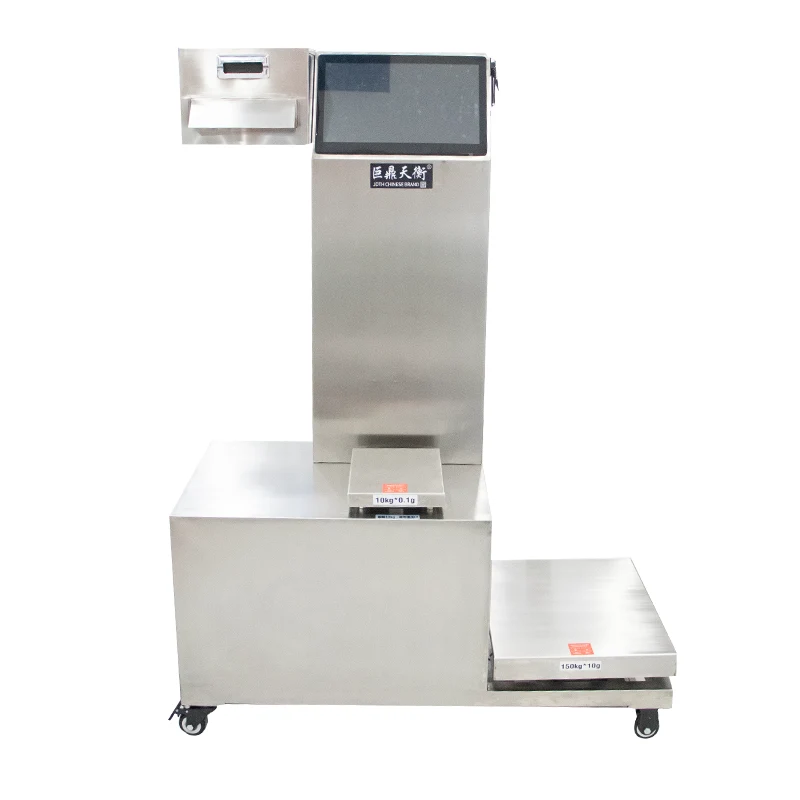
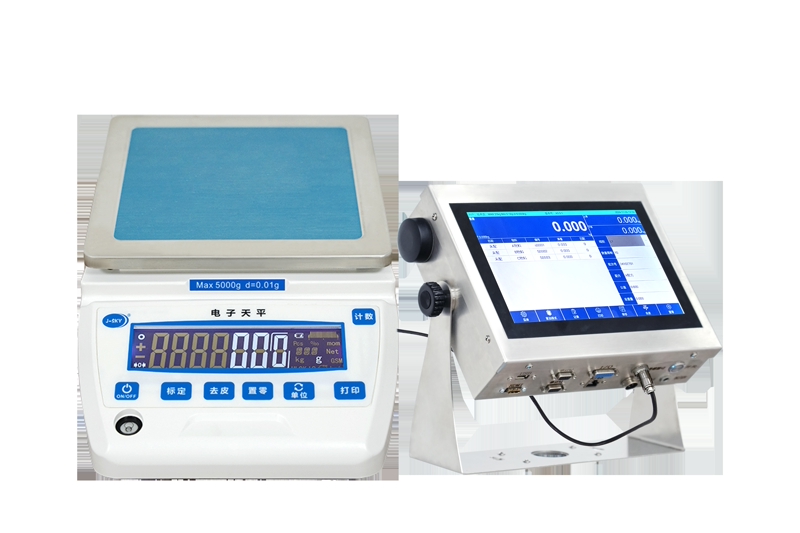
The Intelligent Formula Scale with Automatic Formula Weighing Data Label Printing is a batching workstation developed by Jiangsu Jutian Weighing Equipment Co., Ltd. It is designed for production environments where multiple raw materials must be dispensed according to a defined formula, with each weighing event documented and labelled. The system integrates formula management, guided batching, data recording, and label printing within a single Android-based touchscreen platform.
The equipment supports formula creation and storage, order-based batching execution, real-time comparison of dispensed weight against target values, and automatic label generation upon completion of each weighing step. All batch data—including material codes, target weights, actual weights, timestamps, and operator identification—is logged and available for report generation and system integration.
Model Specifications
|
Model |
Maximum Capacity |
Readability |
Platform Size |
|
JDT-AO919-A35 |
20 / 30 / 50 / 60 / 100 kg |
1 / 2 / 5 g |
300 × 400 mm |
|
JDT-AO919-A35 |
60 / 100 / 150 kg |
2 / 5 / 10 g |
400 × 500 mm |
|
JDT-AO919-A35 |
150 / 200 / 300 kg |
10 / 20 / 50 g |
450 × 600 mm |
|
JDT-AO919-A35 |
200 / 300 / 500 kg |
50 / 100 / 200 g |
600 × 800 mm |
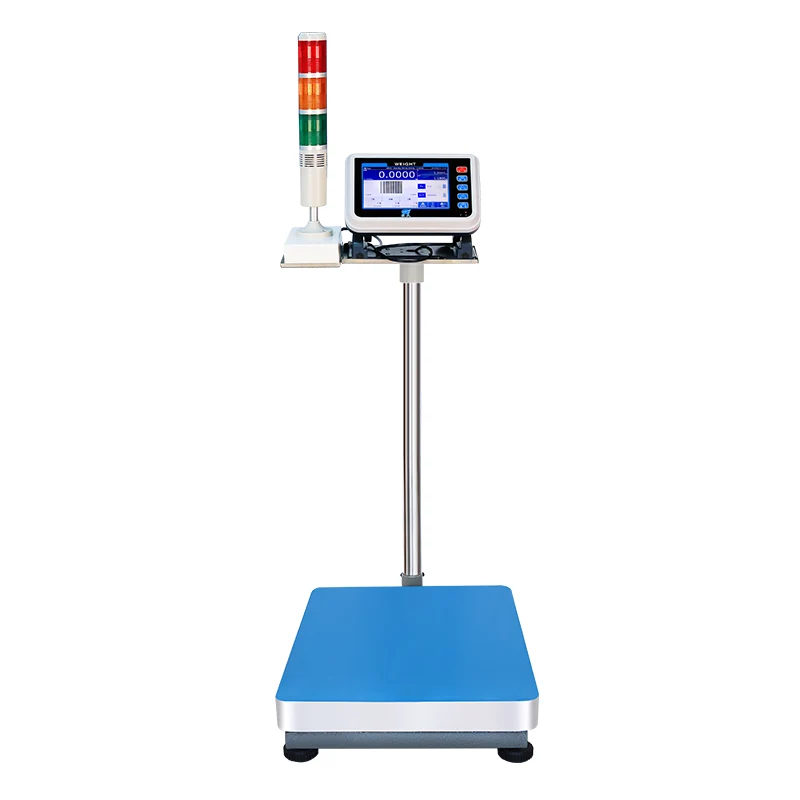
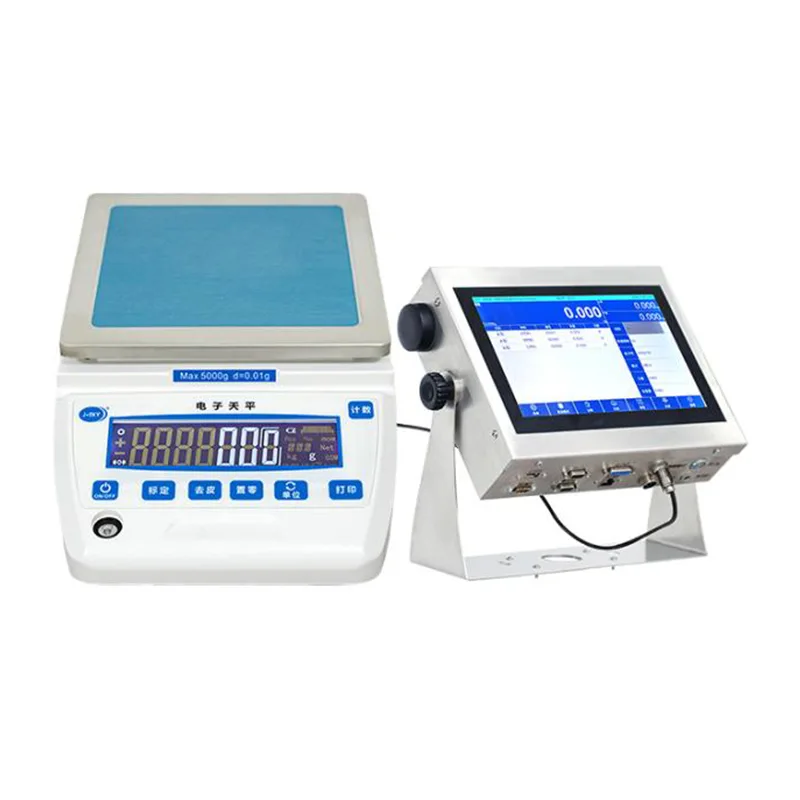
Common system specifications: Display: 10-inch HD capacitive touchscreen (1024×768 resolution); Operating system: Android; CPU: RK3288W quad-core Cortex-A17, 1.8GHz; Memory: 2G RAM + 8G flash storage; Housing and platform: 304 stainless steel construction; Power supply: AC 100-240V input, DC 12.7V 3500mA output; Operating environment: -10℃ to 40℃, humidity below 90% (non-condensing); Standard interfaces: USB×2, RS232×2, I/O output×1, RJ45×1; Built-in communication: Wi-Fi, Bluetooth; Optional: HDMI, 4G IoT, alarm light, printer, barcode scanner, remote display, card reader, PC data management system.
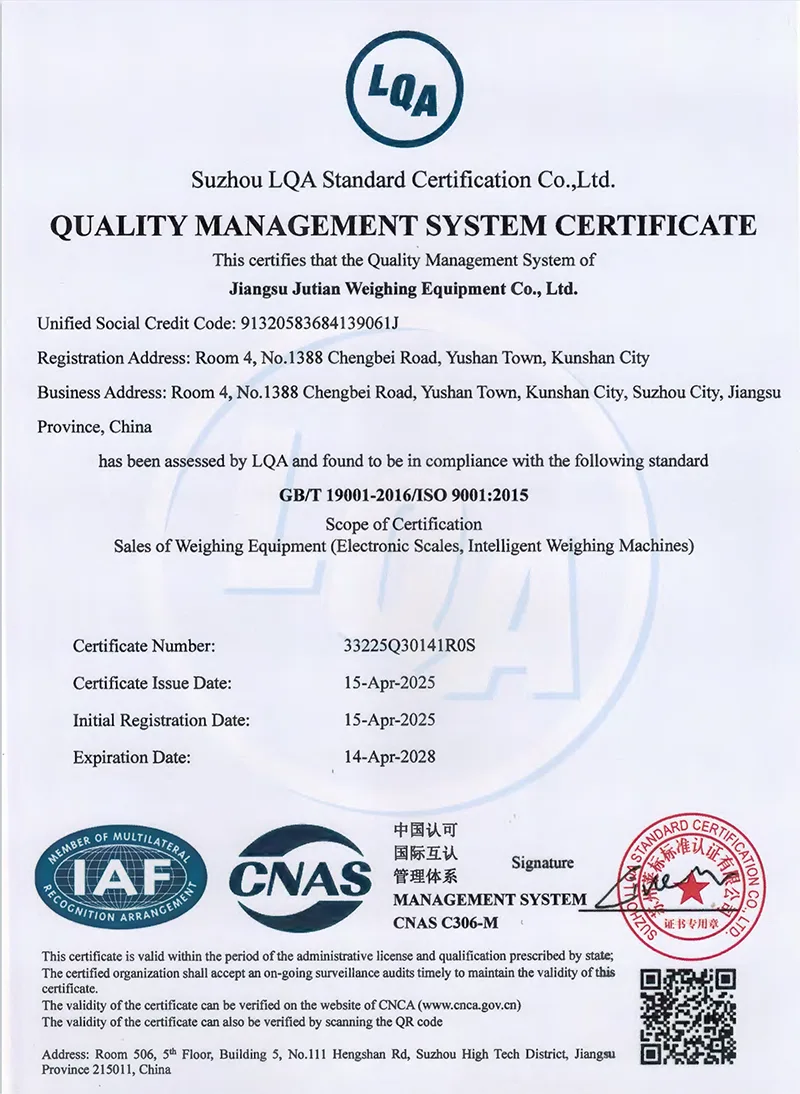
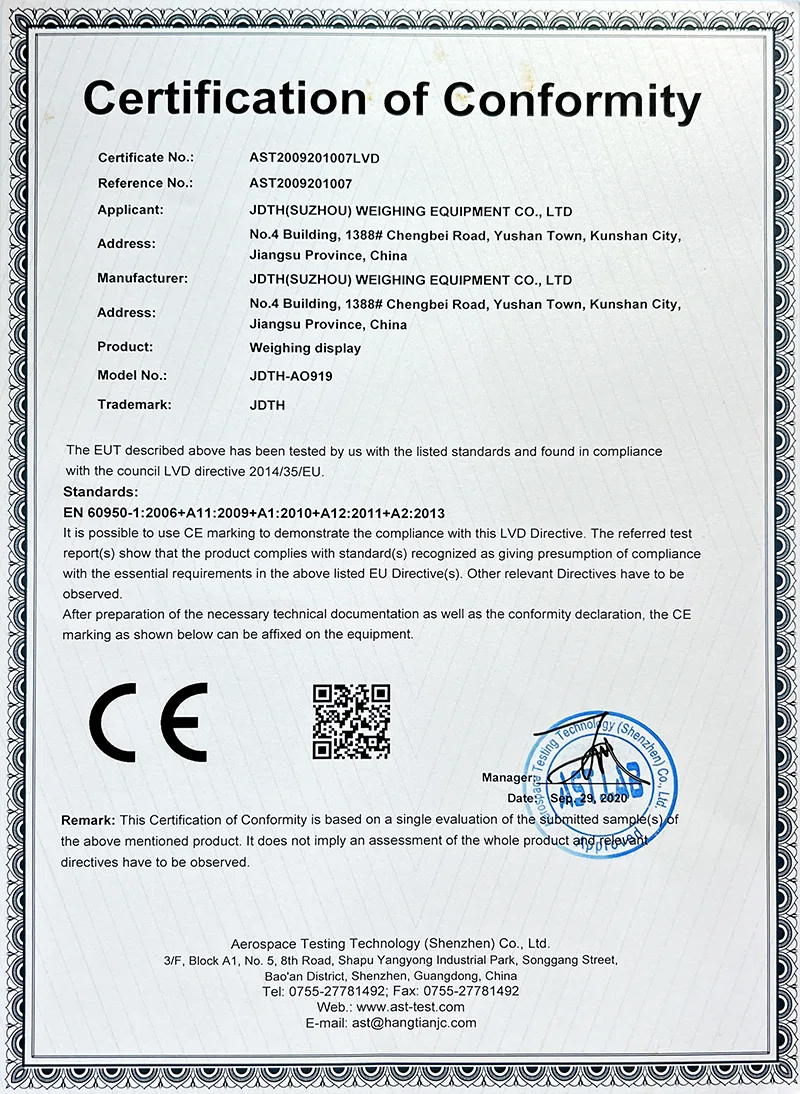
Jiangsu Jutian Weighing Equipment Co., Ltd. holds ISO9001 quality management certification and CE product certification. The company's 919 R&D Center has developed 68 national patents and 20 software copyrights covering weighing instrumentation, embedded systems, and batching software. Manufacturing is conducted in two facilities under standardized quality procedures. The Android-based software platform supports customization of user interfaces, formula management logic, label templates, and communication protocols.
Formula Execution and Batch Management Workflow
The batching process follows a structured sequence managed by the touchscreen application:
1. Order and formula selection: The operator selects a production order from the order management module. Each order references a stored formula that defines the required materials, target weights, tolerance ranges, and batching sequence. Formulas are created and stored in the system database with version control, preventing unauthorized modification through user access restrictions.
2. Material identification and guided dispensing: For each formula step, the display shows the material name, code, and target weight. The operator places the container on the weighing platform, and the system guides dispensing with a real-time weight display. When the dispensed weight falls within the tolerance window, the system confirms the step and automatically advances to the next material.
3. Label printing on completion: Upon successful dispensing of each material, the system can automatically trigger a connected label printer to generate an adhesive label with material code, batch number, actual weight, timestamp, and operator ID. This label is affixed to the material container for downstream traceability.
4. Batch completion and data recording: When all formula steps are completed, the system generates a batch summary that includes material-wise consumption data, total batch weight, operator identification, and timestamps. This record is stored in the internal database and can be exported for batch documentation.
Data Management and Report Generation
The system maintains a structured database of formulas, orders, batching records, and operator activity. Report functions allow users to query historical batching data by date range, product code, formula name, or operator. The system calculates actual raw material consumption against theoretical formula values, providing a material usage variance report that supports inventory reconciliation and cost analysis.
All batching data can be exported in CSV or other structured formats for integration with enterprise systems. The system supports paperless workflow: production orders are created and managed within the application, batching is executed with real-time weight validation, and batch records are stored electronically without manual transcription.
Network Connectivity and System Integration
The standard RJ45 Ethernet interface supports TCP/IP communication with local area network resources. Optional Wi-Fi and 4G IoT modules enable wireless connectivity for facilities without wired network access at the batching station. Data sharing protocols can be configured to interface with enterprise ERP systems, allowing production orders to be downloaded to the scale and batching records to be uploaded to the central database.
The RS232 serial interfaces support connection to external devices including label printers, barcode scanners, and remote displays. The I/O output can be configured for alarm indicators or process control signals. The Android platform allows installation of custom communication applications or protocol adapters developed using the provided SDK.
Typical Application Environments
|
Industry |
Batching Application |
|
Chemical manufacturing |
Dispensing of raw chemicals, additives, and catalysts per production formula; batch traceability for regulatory compliance |
|
Food processing |
Ingredient weighing for sauces, seasonings, baking mixes, and prepared foods; label printing for allergen and batch tracking |
|
Building materials |
Batching of cement additives, pigments, and admixtures; consistency control across production batches |
|
Rubber and plastics |
Weighing of polymers, fillers, plasticizers, and curing agents; formula version control for product grade changes |
|
Pharmaceutical intermediates |
Dispensing of active ingredients and excipients; electronic batch record generation for GMP documentation |
FAQ (Frequently Asked Questions)
How does the system ensure that the correct material is used for each formula step?
When configured with a barcode scanner, the system can require the operator to scan the material container before dispensing. The scanned barcode is compared against the material code in the active formula. A mismatch triggers an on-screen alert and prevents progression until the correct material is scanned. For environments without barcode implementation, the operator confirms material identity through the touchscreen interface, and this confirmation is logged in the batch record.
Can formulas be imported from an external system rather than created on the touchscreen?
Yes. Formulas can be created offline using spreadsheet templates and imported via USB, or transmitted through the network interface from an ERP or formulation management system. The import process validates the data structure and flags any incomplete or inconsistent entries before the formula is saved to the database.
What information is printed on the label after each weighing step?
The label template is configurable. Typical fields include material name, material code, batch or order number, target weight, actual dispensed weight, timestamp, and operator ID. The label format—including barcode symbology if a barcode printer is used—is defined during system setup and can be customized per facility requirements.
How does the system handle a situation where a material is dispensed outside the tolerance range?
The system monitors the dispensed weight in real time. If the weight exceeds the upper tolerance limit, an alert is displayed and the step cannot be confirmed until the deviation is addressed. The event is recorded in the batch log. Depending on the configured workflow, a supervisor with appropriate access rights may need to acknowledge the deviation before the batch can proceed.
Can the system operate as part of a larger, multi-station batching line?
Yes. Multiple formula scales can be networked through Ethernet or Wi-Fi to a central database server. This configuration allows production orders to be distributed to individual workstations, and batching records from all stations to be consolidated for batch reporting and material consumption analysis. The network architecture is designed during project specification.
Hot Tags: Intelligent Formula Scale with Automatic Formula Weighing Data Label Printing, Manufacturer, Supplier, Factory
Related Category
Send Inquiry
Contact Info
-
Address
Building 4, 1388# Chengbei Road, Yushan Town, Kunshan City, Jiangsu Province, China
-
Tel
-
Email
If you have any enquiry about quotation or cooperation, please feel free to email us at JDTH919@j-sky.cn or use the following inquiry form. Our sales representative will contact you within 24 hours. Thank you for your interest in our products.