English
- English
- Español
- Português
- русский
- Français
- 日本語
- Deutsch
- tiếng Việt
- Italiano
- Nederlands
- ภาษาไทย
- Polski
- 한국어
- Svenska
- magyar
- Malay
- বাংলা ভাষার
- Dansk
- Suomi
- हिन्दी
- Pilipino
- Türkçe
- Gaeilge
- العربية
- Indonesia
- Norsk
- تمل
- český
- ελληνικά
- український
- Javanese
- فارسی
- தமிழ்
- తెలుగు
- नेपाली
- Burmese
- български
- ລາວ
- Latine
- Қазақша
- Euskal
- Azərbaycan
- Slovenský jazyk
- Македонски
- Lietuvos
- Eesti Keel
- Română
- Slovenski
- मराठी
- Srpski језик
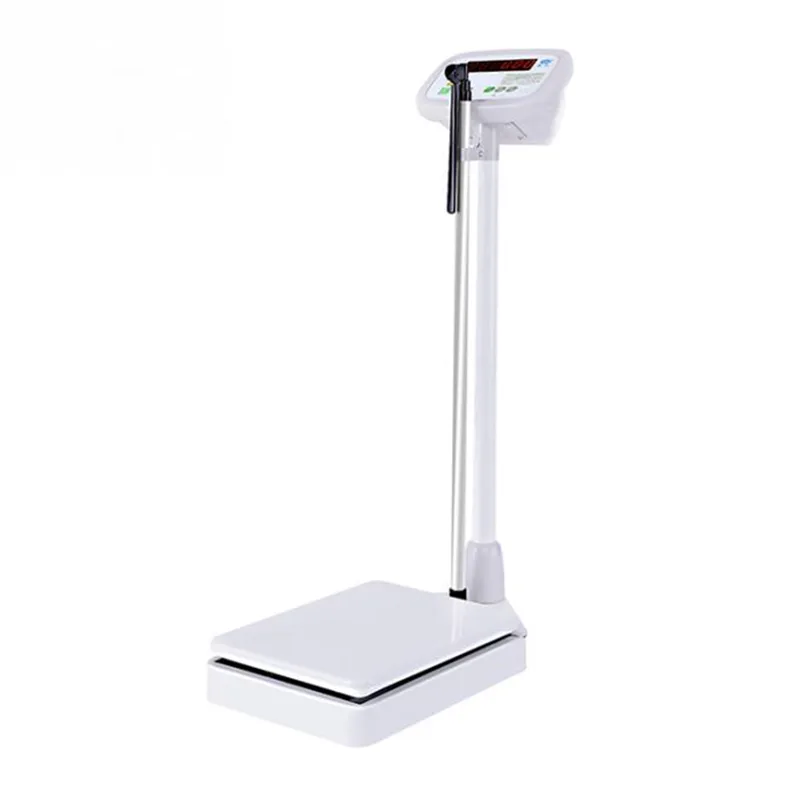
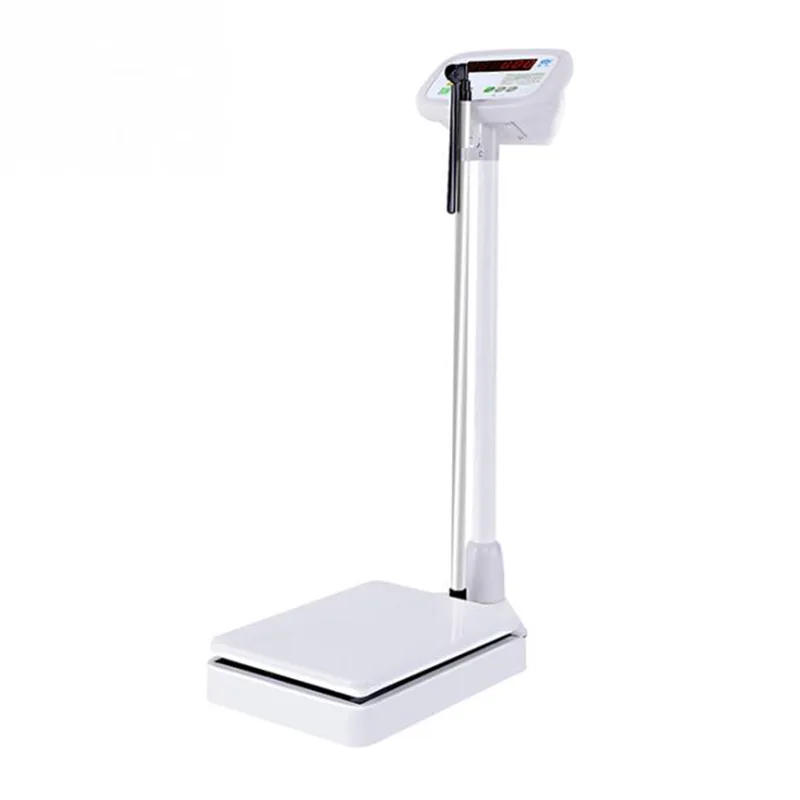
Smart Electronic Height and Weight Scale
J-SKY is a professional Chinese manufacturer with years of experience in smart weighing devices, providing steady quality products and reliable after-sales service for global buyers. This Smart Electronic Height and Weight Scale realizes precise simultaneous measurement of height, weight and BMI, with advanced sensing tech and user-friendly operation. It supports customized functions, offers favorable price for bulk orders, fits multiple scenarios and comes with one-year warranty and lifetime maintenance support.
The Smart Electronic Height and Weight Scale (Model JDT-JT-918) is a multi-parameter health measurement device manufactured by Jiangsu Jutian Weighing Equipment Co., Ltd. It is designed for scenarios where body weight, height, and derived health indicators such as BMI must be collected efficiently and recorded—including hospital outpatient departments, community health service centers, school health offices, fitness facilities, and occupational health screening programs.
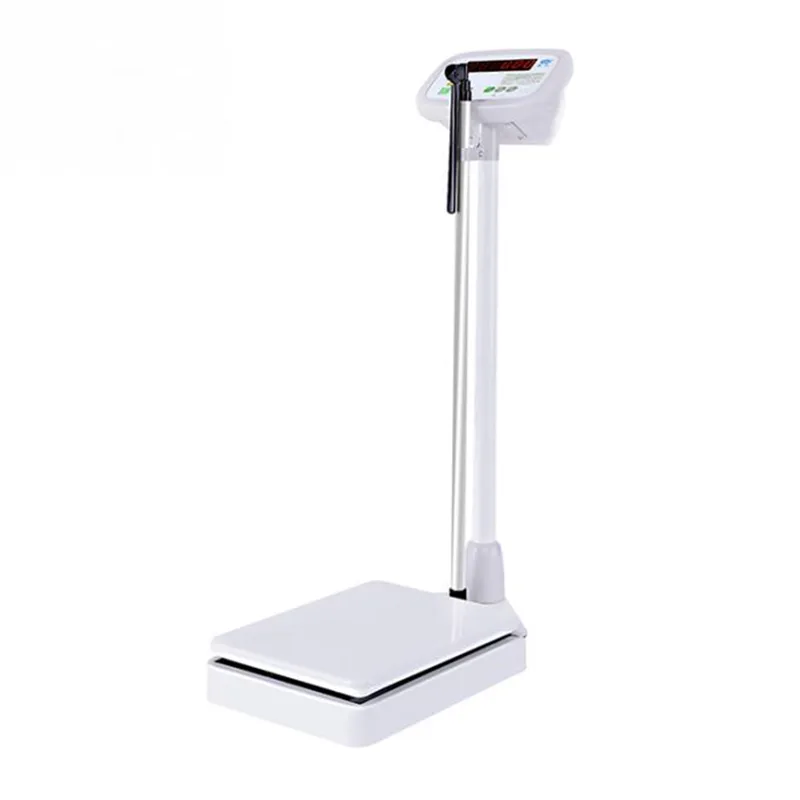
The device integrates a strain gauge load cell weighing platform with a mechanical telescopic height rod. Weight and height data are captured simultaneously during a single measurement cycle, and BMI is calculated automatically by the onboard processor. This eliminates the separate weighing and height measurement steps typical of manual health screening, reducing operator time and transcription errors.
Metrological Specifications
|
Parameter |
Specification |
|
Model |
JDT-JT-918 |
|
Weight Measuring Range |
2 kg – 200 kg |
|
Weight Readability |
20 g |
|
Weight Accuracy Class |
Class III (per OIML R76) |
|
Height Measuring Range |
76 cm – 203 cm |
|
Height Measurement Accuracy |
±0.5 cm |
|
Height Rod Mechanism |
Aluminum alloy telescopic rod with measurement scale |
|
Display |
LED red digit display; Chinese or English per configuration |
|
Derived Indicators |
BMI (calculated from measured weight and height) |
|
Power Supply |
Built-in rechargeable battery; automatic power-saving mode |
|
Platform Construction |
White painted base with non-slip scale pan cover; rounded corner design |
Measurement notes: Weight accuracy of 20 g is specified for the device under controlled calibration conditions. Accuracy Class III corresponds to a verification scale interval suitable for medical weighing applications as defined by OIML R76. Height measurement accuracy requires correct patient positioning—standing upright with heels together, back straight, and the head positioned in the Frankfurt horizontal plane.


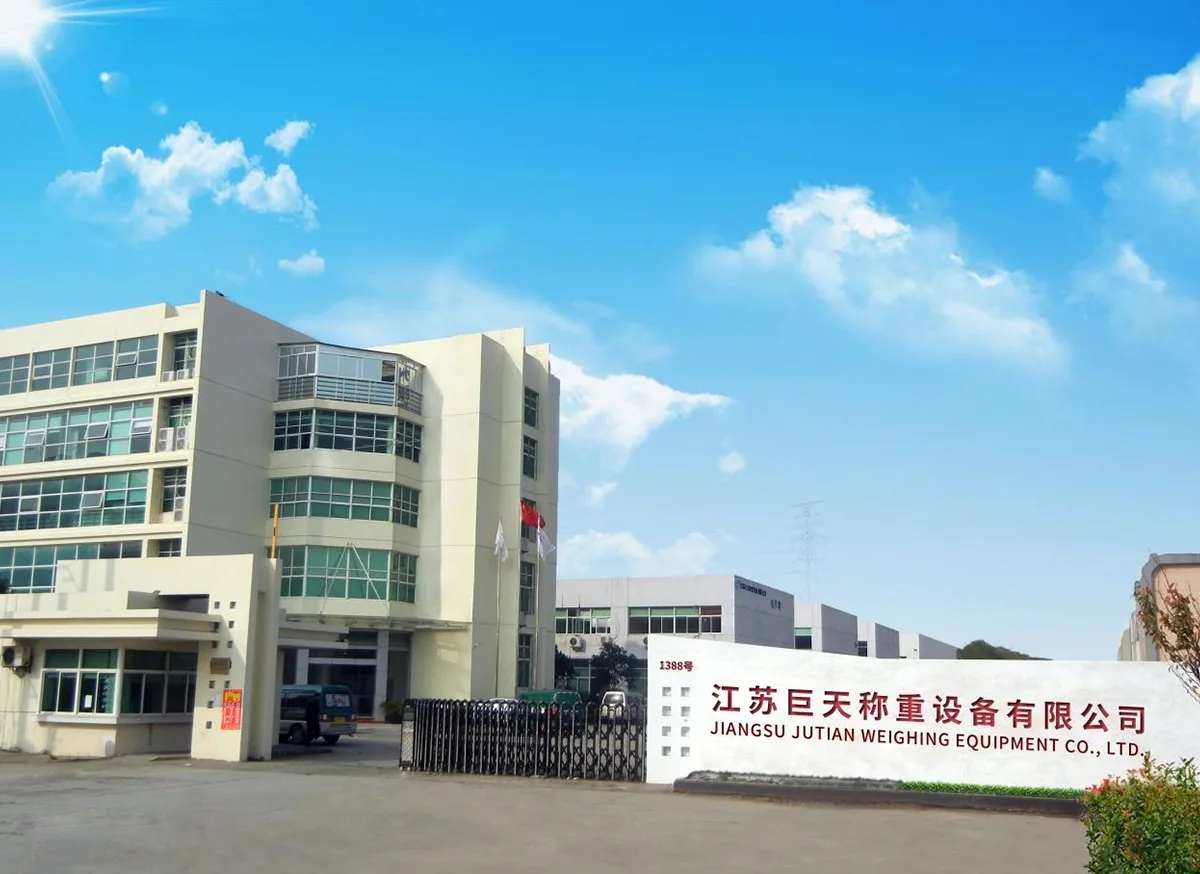
Jiangsu Jutian Weighing Equipment Co., Ltd. has specialized in weighing instrumentation for over 20 years, holding ISO9001 quality management certification and CE product certification. The company's 919 R&D Center has developed 68 national patents and 20 software copyrights. Non-standard customization and OEM/ODM projects are supported through two manufacturing facilities, with products supplied to healthcare, fitness, education, and public health sectors globally.
Measurement Principle and Data Processing
Weight measurement: The weighing platform uses strain gauge load cells configured in a multi-point balanced arrangement beneath the platform. When the user stands on the platform, the load cells convert the applied force into an electrical signal proportional to the mass. The signal is amplified, digitized, and processed by the controller. Temperature compensation and non-linear correction algorithms are applied to maintain accuracy across the operating temperature range. Weight data is locked and displayed once a stable reading is obtained.
Height measurement: The telescopic aluminum alloy rod extends upward from the platform base. The user stands against the rod, and the operator lowers the headpiece to the crown of the head. The height reading is taken from the calibrated scale on the rod. The mechanical design eliminates the need for ultrasonic or optical height sensors, reducing calibration complexity and eliminating measurement errors caused by hair texture, headwear, or ambient light conditions that can affect non-contact sensors.
BMI calculation: The processor calculates BMI using the formula BMI = weight (kg) ÷ height² (m²) from the measured weight and manually or electronically captured height values. The calculated BMI is displayed alongside weight and height. The BMI value can be interpreted against reference ranges configured in the device or referenced in printed documentation.
Optional Functional Modules
The standard configuration provides weight, height, and BMI measurement with LED display output. Additional functional modules can be integrated based on deployment requirements:
Voice announcement: An optional speaker module provides audible readout of measured weight and height values, suitable for visually impaired users or high-throughput screening where operators need to record values without reading the display.
Wireless connectivity: Bluetooth or Wi-Fi modules enable data transmission to a paired mobile application or health management mini-program for personal health tracking.
System integration: RS232 interface supports data output to hospital HIS/LIS systems or health examination management platforms, allowing batch upload of measurement records and integration into electronic health records.
Special application modes: A mother-infant weighing mode (adult weight tared automatically to display infant weight) and a mobile clinic configuration with transport wheels and foldable structure are available for specific deployment scenarios.
Installation and Environmental Considerations
The device should be placed on a level, hard surface to ensure accurate weight readings—carpeted or uneven flooring may introduce measurement variation. The base features non-slip pads and a stable footprint designed to prevent tipping during use. The telescopic rod folds for storage and transport. The built-in rechargeable battery supports operation in locations without immediate access to power outlets, with a low-battery indicator to prompt recharging. Routine maintenance is limited to platform cleaning and periodic calibration verification with certified test weights at intervals defined by the facility's quality protocol.
Typical Deployment Environments
|
Environment |
Typical Use |
|
Hospital outpatient & health examination centers |
Routine vital sign collection; pre-consultation screening; occupational health checks |
|
Community health service stations |
Public health screening programs; chronic disease monitoring; elderly health assessments |
|
School health offices |
Student growth monitoring; annual physical examination data collection |
|
Fitness centers & weight management clinics |
Member baseline assessment; progress tracking; body composition trend monitoring |
|
Pharmacy chains & retail health kiosks |
Self-service health screening; customer engagement and health awareness |
|
Mobile medical examination vehicles |
Portable deployment for community outreach and workplace health programs |
FAQ (Frequently Asked Questions)
What does Accuracy Class III mean for a medical weighing device?
Accuracy Class III is defined by OIML R76 and corresponds to a verification scale interval suitable for applications including medical weighing, commercial transactions, and postal measurements. For the JDT-JT-918 with a 20 g readability and 200 kg capacity, the number of verification scale intervals places it within Class III. This class is commonly accepted for clinical weight measurement where precision to the nearest 20 g is sufficient for health assessment purposes.
How is height measurement accuracy ensured with a mechanical rod?
The aluminum alloy telescopic rod is manufactured with a calibrated measurement scale. Measurement accuracy depends on correct patient positioning—standing upright on the platform with heels together, back in contact with the rod, and the head oriented in the Frankfurt horizontal plane. Operator training on positioning technique is recommended for consistent results. The mechanical rod design is not affected by ambient light, hair style, or head coverings, which can influence ultrasonic measurement devices.
Does the device require a power outlet to operate?
The built-in rechargeable battery supports cordless operation for a full working day under typical usage patterns. The device can be placed in locations without immediate power access—such as screening tents, community halls, or school gymnasiums. The battery recharges when the device is connected to mains power, and a low-battery indicator provides advance warning before power is depleted.
Can the device transmit data to a hospital information system?
When equipped with the optional RS232 communication module, the device can output measurement data to a connected computer or terminal. Integration with HIS, LIS, or health examination management software requires protocol configuration. The data format and transmission parameters can be specified to match the receiving system. For deployments without wired connectivity, Bluetooth or Wi-Fi modules are available for wireless data transmission to mobile applications.
How does the mother-infant weighing mode work?
In mother-infant mode, the adult stands on the platform alone first. The device records the adult weight. The adult then steps onto the platform while holding the infant. The device automatically subtracts the previously recorded adult weight to display the infant's weight. This mode is available on specially configured models and must be specified at the time of ordering.
Hot Tags: Smart Electronic Height and Weight Scale, Manufacturer, Supplier, Factory
Send Inquiry
Contact Info
-
Address
Building 4, 1388# Chengbei Road, Yushan Town, Kunshan City, Jiangsu Province, China
-
Tel
-
Email
If you have any enquiry about quotation or cooperation, please feel free to email us at JDTH919@j-sky.cn or use the following inquiry form. Our sales representative will contact you within 24 hours. Thank you for your interest in our products.