English
- English
- Español
- Português
- русский
- Français
- 日本語
- Deutsch
- tiếng Việt
- Italiano
- Nederlands
- ภาษาไทย
- Polski
- 한국어
- Svenska
- magyar
- Malay
- বাংলা ভাষার
- Dansk
- Suomi
- हिन्दी
- Pilipino
- Türkçe
- Gaeilge
- العربية
- Indonesia
- Norsk
- تمل
- český
- ελληνικά
- український
- Javanese
- فارسی
- தமிழ்
- తెలుగు
- नेपाली
- Burmese
- български
- ລາວ
- Latine
- Қазақша
- Euskal
- Azərbaycan
- Slovenský jazyk
- Македонски
- Lietuvos
- Eesti Keel
- Română
- Slovenski
- मराठी
- Srpski језик

How do Height and Weight Scales Become Essential Health Devices Across Scenarios Like Medical Institutions and Homes?
With the increased focus on health awareness, height and weight scales have evolved from traditional "single-function measuring tools" to "scenario-based health devices." Whether for precise testing in medical institutions, data tracking in fitness facilities, large-scale screening in school physical examinations, or daily health monitoring at home, they have become essential health management equipment across scenarios. Leveraging features like "high precision, easy operation, and connectivity," they fully meet the measurement needs of different populations.
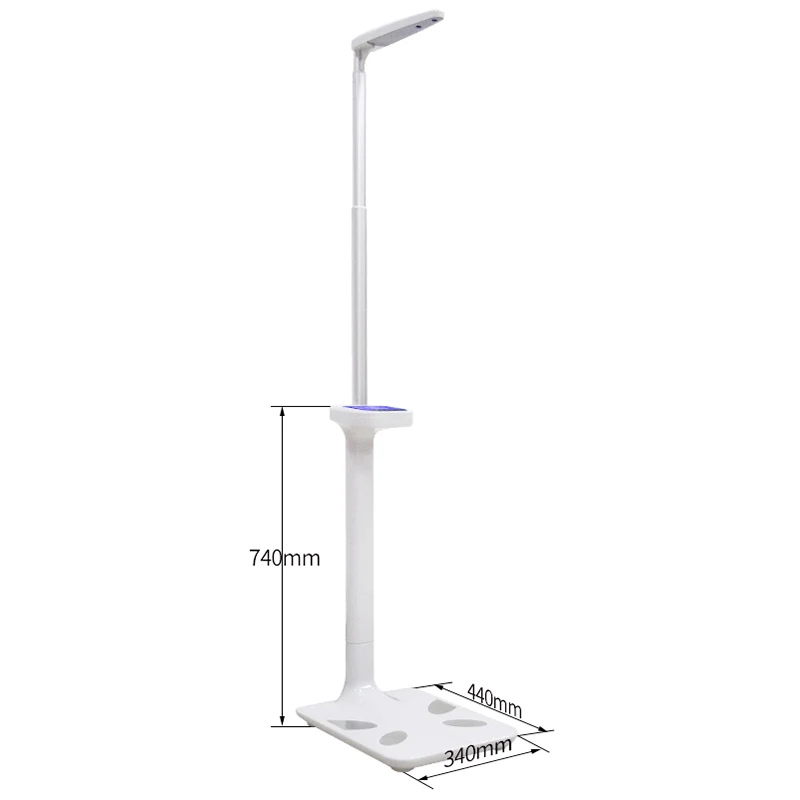
I. Medical Institution Scenario: Precision & Efficiency for Diagnostic Decisions
Scenarios such as hospitals and community health centers have strict requirements for measurement accuracy, and height and weight scales serve as the "data entry point" for basic diagnosis and treatment:
Medical-grade height and weight scales have a measurement error of ≤±0.1kg (weight) and ±0.5cm (height). They support integration with electronic medical record systems, enabling automatic data entry and reducing manual recording errors;
Data from a community hospital shows that after adopting intelligent height and weight scales, physical examination efficiency increased by 40%. The measurement time per person was shortened from 1 minute to 30 seconds, effectively alleviating queuing pressure during peak medical hours.
II. Fitness Facility Scenario: Data Tracking for Scientific Training
Fitness centers, yoga studios, and similar venues rely on height and weight data to develop personalized plans, making "data continuity" of scales critical:
Intelligent height and weight scales can synchronize derived data such as body fat percentage and BMI. Users can scan a QR code to view historical trends, helping trainers adjust training plans;
Industry research indicates that fitness centers equipped with intelligent height and weight scales have a 25% higher user retention rate than traditional gyms. This is because data visualization makes training effects more perceptible.
III. School Physical Examination Scenario: Large-Scale Screening for Student Health
Primary schools, middle schools and universities need to measure many students quickly during annual physical exams. This shows that scales need to be "convenient" and good at "managing data".
Scales made for schools let you measure right when you stand on them. They also speak the results automatically. They work for students aged 6 to 22. Each measurement takes 20 seconds or less.
One middle school started using scales that connect to the internet. Then, physical exam data could be sent to the education bureau's health platform right away. The time to organize data went from 3 days to 4 hours. This makes it easy to track students' growth for a long time.
IV. Home Daily Scenario: Convenient Monitoring for Family Health
Home scenarios prioritize "ease of use" and "adaptability to all age groups," making height and weight scales the "little health butler" for households:
Home-use models support Bluetooth connection to mobile apps, automatically generating children's growth curves and weekly health reports for adults. For the elderly, they offer enlarged fonts and voice prompts;
E-commerce platform data shows that in 2024, sales of intelligent home-use height and weight scales increased by 60% year-on-year, with "parent-child models" accounting for over 35%—meeting parents' needs to monitor their children's growth.
| Application Scenarios | Core Application Value | Key Data | Target Population/Needs |
|---|---|---|---|
| Medical Institutions | Precise Measurement + Data Integration | Error ≤±0.1kg/±0.5cm; Efficiency ↑40% | Patient diagnosis, community physical exams |
| Fitness Facilities | Data Tracking + Effect Visualization | User Retention Rate ↑25% | Fitness enthusiasts, trainer plan development |
| School Physical Exams | Large-Scale Screening + Data Management | ≤20 seconds per measurement; Organization Time ↓89% | Primary/middle school students, college students |
| Home Daily Use | Convenient Monitoring + All-Age Adaptability | Sales ↑60% YoY; Parent-child models account for 35% | Children’s growth monitoring, adult health management |
Currently, height and weight scales are upgrading toward "multi-dimensional health monitoring." Some products have extra functions. These include bone density and body water detection, and this makes their uses wider.
These products are the "basic carrier" for health management. Their ability to work in different scenarios will keep getting better. They give precise and efficient measurement solutions for different fields.
Related News
- Technical Features of Weighing Machines.
- Electronic Table Scale Overview.
- The core reason for the price difference in drum checkweighers.
- What is High Speed Checkweigher: How It Works and Why It Matters in Modern Manufacturing
- How Electronic Table Scale Improves Accuracy and Efficiency in Modern Weighing Operations
- How Does an Electronic Weighbridge Improve Industrial Efficiency?
Leave me a message