English
- English
- Español
- Português
- русский
- Français
- 日本語
- Deutsch
- tiếng Việt
- Italiano
- Nederlands
- ภาษาไทย
- Polski
- 한국어
- Svenska
- magyar
- Malay
- বাংলা ভাষার
- Dansk
- Suomi
- हिन्दी
- Pilipino
- Türkçe
- Gaeilge
- العربية
- Indonesia
- Norsk
- تمل
- český
- ελληνικά
- український
- Javanese
- فارسی
- தமிழ்
- తెలుగు
- नेपाली
- Burmese
- български
- ລາວ
- Latine
- Қазақша
- Euskal
- Azərbaycan
- Slovenský jazyk
- Македонски
- Lietuvos
- Eesti Keel
- Română
- Slovenski
- मराठी
- Srpski језик

What is High Speed Checkweigher: How It Works and Why It Matters in Modern Manufacturing
Abstract
A High Speed Checkweigher is a critical piece of automated quality control equipment used in modern production lines to ensure product weight accuracy at high throughput speeds. It plays a vital role in preventing underfilled or overfilled products, reducing material waste, ensuring regulatory compliance, and maintaining brand integrity. This article explains its working principles, industrial applications, technical advantages, and purchasing considerations to help manufacturers solve common production inefficiencies and quality risks.
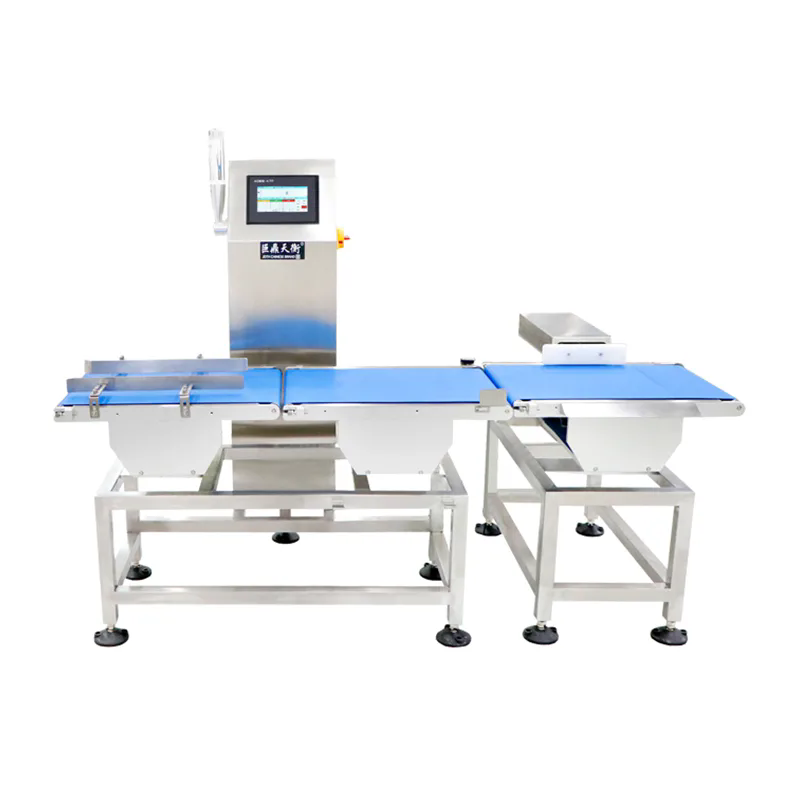
Table of Contents
- 1. What is a High Speed Checkweigher?
- 2. Why High Speed Checkweighers Matter in Manufacturing
- 3. How a High Speed Checkweigher Works
- 4. Key Features and Technical Advantages
- 5. Industrial Applications and Comparison Table
- 6. How to Choose the Right Checkweigher
- 7. Common Production Problems It Solves
- 8. Frequently Asked Questions (FAQ)
1. What is a High Speed Checkweigher?
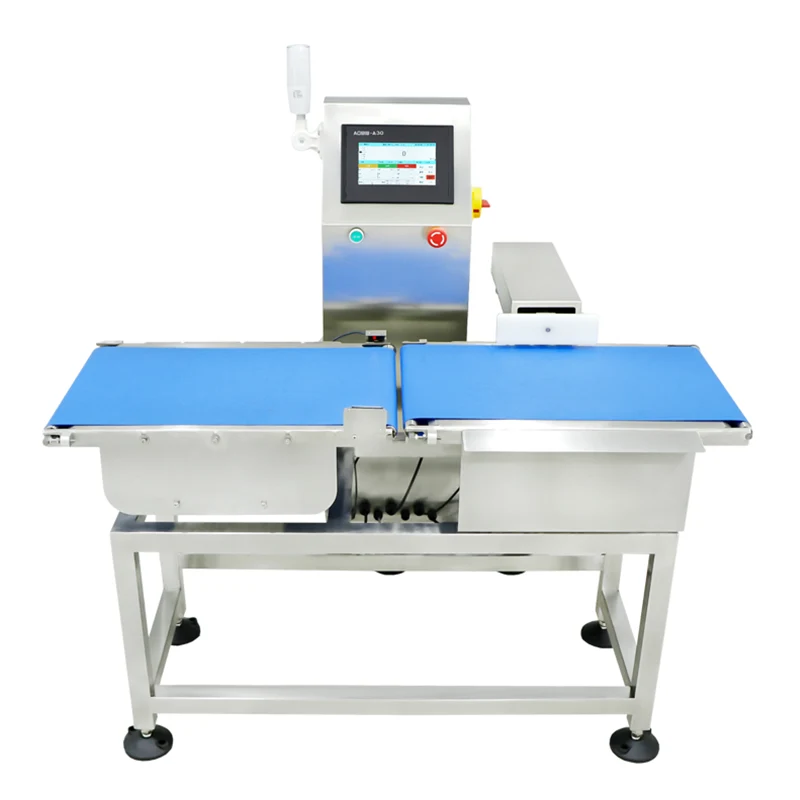
A High Speed Checkweigher is an automated weighing system integrated into production lines to verify product weight in real time without interrupting the flow of goods. Unlike manual weighing methods, it operates continuously, handling hundreds or even thousands of units per minute depending on configuration.
It is widely used in industries such as food processing, pharmaceuticals, cosmetics, packaging, and logistics where precision and speed are equally critical.
2. Why High Speed Checkweighers Matter in Manufacturing
In fast-paced production environments, even minor weight deviations can lead to significant financial and operational issues. High speed checkweighers solve these challenges by providing:
- Regulatory compliance: Ensures packaged goods meet legal weight requirements.
- Cost control: Prevents product giveaway due to overfilling.
- Quality assurance: Detects missing components or underfilled packages.
- Brand protection: Avoids customer complaints caused by inconsistent packaging.
Without automated weighing, manufacturers risk inefficiencies that accumulate into large-scale losses over time.
3. How a High Speed Checkweigher Works
The system typically consists of an infeed conveyor, weighing conveyor, and rejection mechanism. Products pass through the weighing zone while moving, allowing real-time measurement without stopping the line.
Basic working process:
- Product enters the conveyor system.
- It passes over a precision load cell.
- Weight data is captured in milliseconds.
- The system compares it to preset thresholds.
- Non-compliant products are automatically rejected.
Advanced models, such as those developed by J-SKY, integrate high-speed digital filtering technology to minimize vibration interference and maintain accuracy even at high throughput rates.
4. Key Features and Technical Advantages
- High-speed dynamic weighing capability
- Multi-stage filtering for vibration compensation
- Stainless steel hygienic design for food-grade environments
- Touchscreen PLC control interface
- Data storage and production analytics integration
- Automatic rejection systems (air blast, pusher, drop flap)
These features ensure the system is not only fast but also reliable in long-term industrial use.
5. Industrial Applications and Comparison Table
High speed checkweighers are widely applied across multiple industries. Below is a simplified comparison of usage scenarios:
| Industry | Application | Main Benefit |
|---|---|---|
| Food & Beverage | Packaged snacks, frozen food | Ensures correct net weight compliance |
| Pharmaceutical | Tablet bottles, sachets | Prevents dosage inconsistencies |
| Cosmetics | Creams, lotions, bottles | Maintains brand quality standards |
| Logistics | Parcel verification | Optimizes shipping cost accuracy |
6. How to Choose the Right Checkweigher
Selecting the correct system depends on production requirements. Consider the following factors:
- Speed capacity: Match machine throughput with production line speed.
- Accuracy range: Required tolerance level (±0.01g to ±5g depending on product).
- Product type: Solid, liquid, fragile, or irregular shapes.
- Environmental conditions: Temperature, humidity, washdown requirements.
- Integration needs: Compatibility with existing production systems.
Manufacturers like J-SKY offer customizable configurations to meet different industrial demands.
7. Common Production Problems It Solves
High speed checkweighers are designed to eliminate recurring production inefficiencies such as:
- Overfilling and material waste
- Underfilled product compliance failures
- Manual weighing bottlenecks
- Inconsistent packaging quality
- Regulatory penalties due to weight deviation
By automating quality control, manufacturers achieve higher efficiency with fewer human errors.
8. Frequently Asked Questions (FAQ)
Q1: Can a high speed checkweigher work on fragile products?
Yes. Modern systems are designed with soft handling conveyors to minimize impact.
Q2: What is the typical accuracy of these machines?
Depending on model and configuration, accuracy can reach up to ±0.01g in high-end systems.
Q3: Is it suitable for small production lines?
Yes, scalable models exist for both small and large-scale manufacturing environments.
Q4: Does it require frequent calibration?
Regular calibration is recommended, but modern systems significantly reduce recalibration frequency.
Q5: Can it integrate with production data systems?
Yes, most advanced checkweighers support data export and smart factory integration.
Conclusion
A High Speed Checkweigher is no longer optional in modern automated production—it is a necessity for ensuring quality, efficiency, and compliance. By combining precision engineering with intelligent automation, manufacturers can significantly reduce operational risks while improving output consistency.
Solutions provided by J-SKY are designed to meet demanding industrial environments, offering stability, speed, and long-term reliability for global production lines.
If you are looking to upgrade your production efficiency and ensure perfect weight control, contact us today at J-SKY. Our team is ready to provide tailored solutions for your manufacturing needs — contact us now and optimize your production line with confidence.
Related News
- Technical Features of Weighing Machines.
- Electronic Table Scale Overview.
- The core reason for the price difference in drum checkweighers.
- How Electronic Table Scale Improves Accuracy and Efficiency in Modern Weighing Operations
- How Does an Electronic Weighbridge Improve Industrial Efficiency?
- How Does an Electronic Platform Scale Improve Accuracy and Efficiency in Modern Weighing?
Leave me a message