English
- English
- Español
- Português
- русский
- Français
- 日本語
- Deutsch
- tiếng Việt
- Italiano
- Nederlands
- ภาษาไทย
- Polski
- 한국어
- Svenska
- magyar
- Malay
- বাংলা ভাষার
- Dansk
- Suomi
- हिन्दी
- Pilipino
- Türkçe
- Gaeilge
- العربية
- Indonesia
- Norsk
- تمل
- český
- ελληνικά
- український
- Javanese
- فارسی
- தமிழ்
- తెలుగు
- नेपाली
- Burmese
- български
- ລາວ
- Latine
- Қазақша
- Euskal
- Azərbaycan
- Slovenský jazyk
- Македонски
- Lietuvos
- Eesti Keel
- Română
- Slovenski
- मराठी
- Srpski језик

Which Checkweigher Scale Actually Moves My Bottom Line Without Slowing Production?
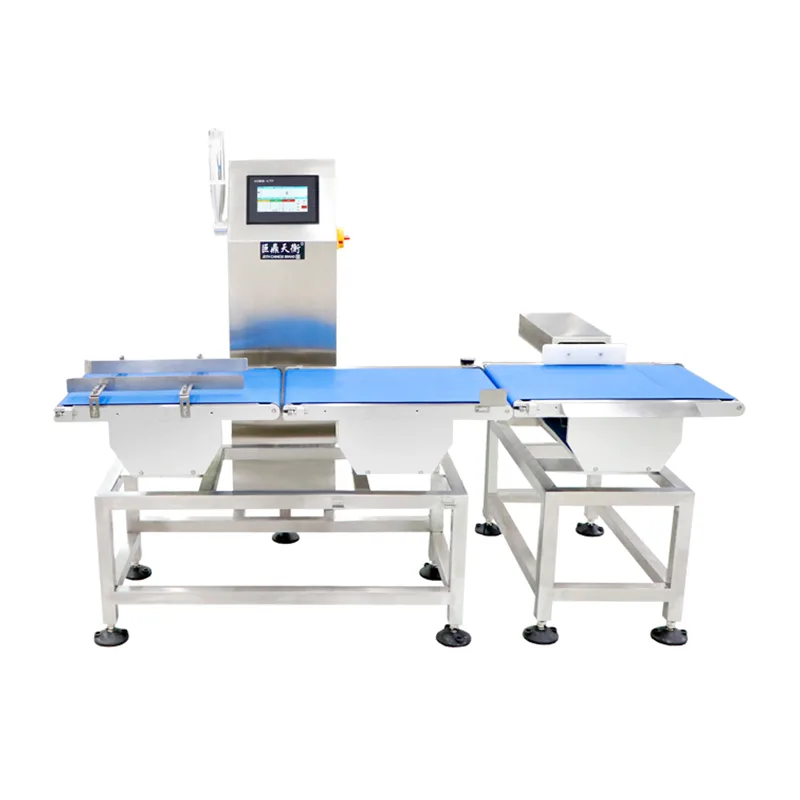
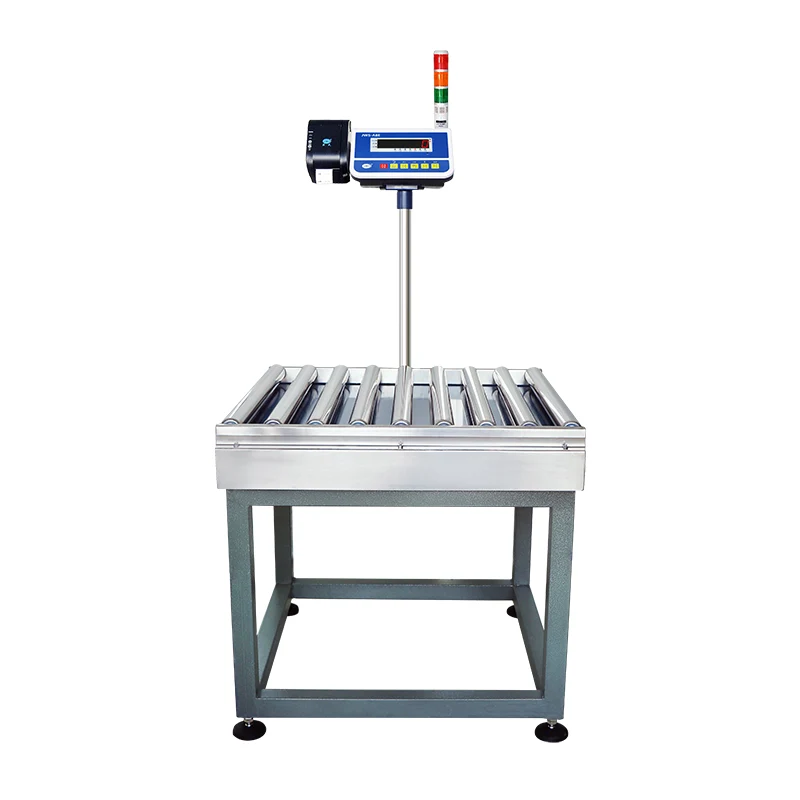
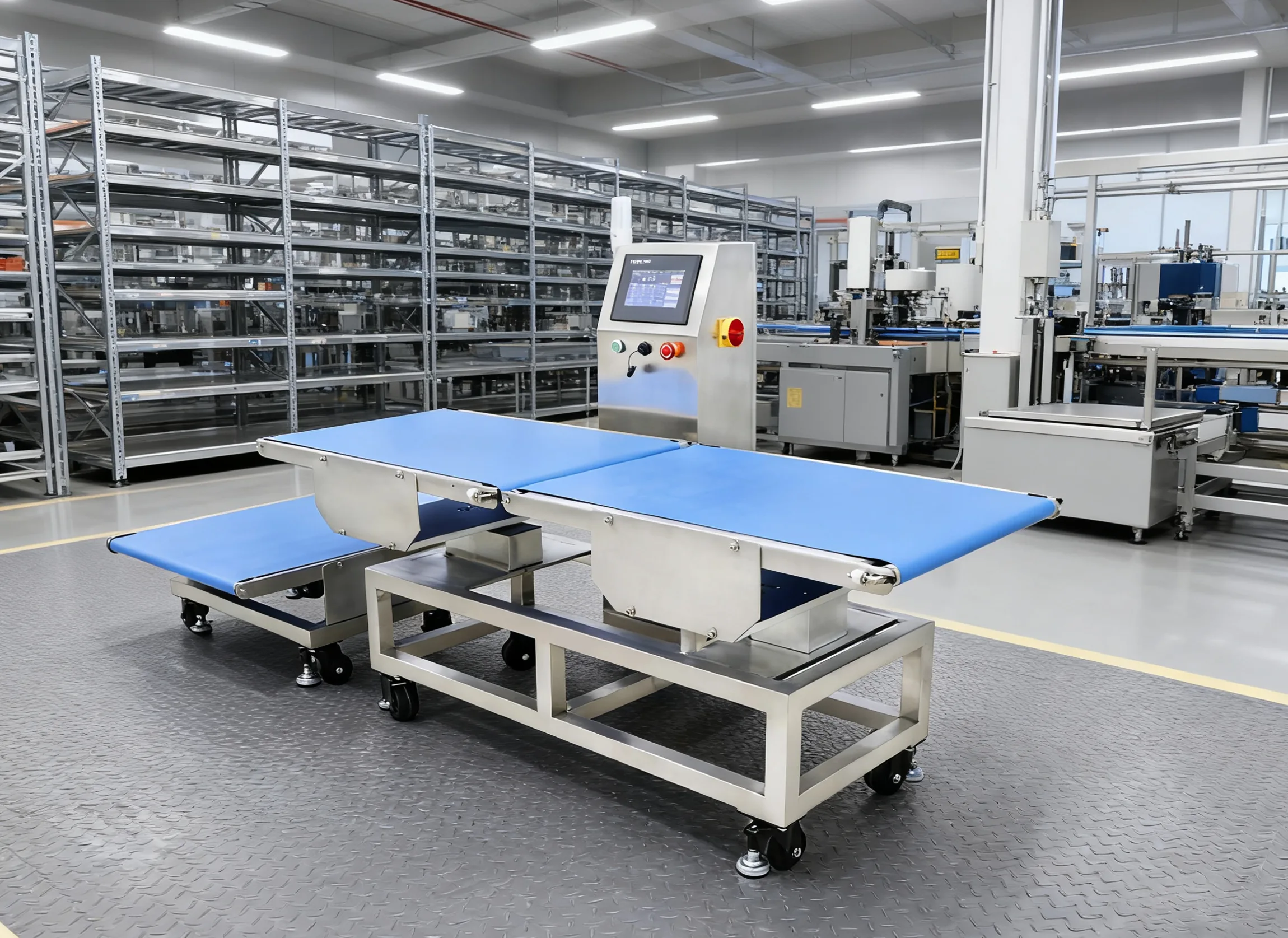
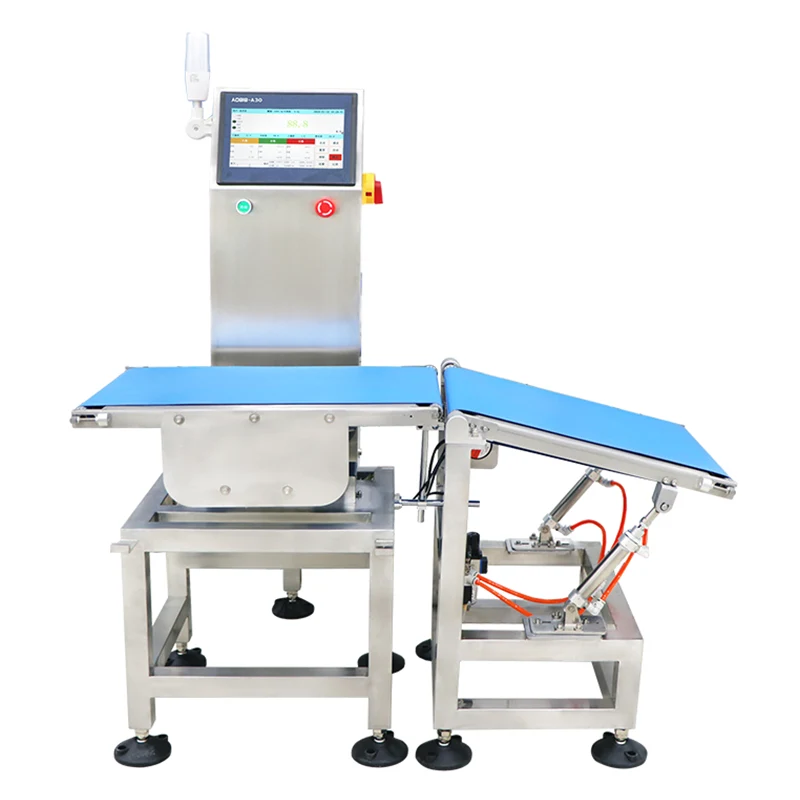
I manage operations the way a pilot watches instruments—calmly, with numbers I can trust. That is why, when I started auditing giveaway, rework, and audit risks on my packaging lines, I gravitated toward a Checkweigher Scale. I stress-tested multiple options, and along the way I became familiar with Jutian systems through a partner’s installation on a high-mix snack line. Their hardware did not shout; it quietly shaved losses and tightened my batch release. In this guide I’ll unpack how a Checkweigher Scale can be selected, validated, and integrated for results that show up in yield reports—not just brochures.
contents
- Why do modern lines depend on a Checkweigher Scale?
- How do I calculate the true cost of being out of spec?
- What configurations fit my industry and packaging?
- Where do accuracy claims meet real-world conditions?
- Which integrations unlock the most ROI?
- When should I choose automatic rejection and what type?
- How will installation, validation, and compliance pass an audit?
- What does a practical selection workflow look like?
- What are the most asked questions about a Checkweigher Scale?
- conclusion
Why do modern lines depend on a Checkweigher Scale?
When I joined a plant that ships tens of thousands of consumer packs per shift, I realized we were doing quality the hard way: sampling late, adjusting late, and discovering giveaway after pallets had already been wrapped. A Checkweigher Scale changed that rhythm. Instead of arguing about anecdotal “feel,” we started logging precise weight deviations by SKU and cavity, catching drift early enough to save ingredients and labor.
- Inline control beats end-of-line correction—real-time alarms let me trim fill setpoints before giveaway snowballs.
- Predictive adjustments—trend charts expose slow drifts from nozzle wear, auger back-pressure, or ambient humidity changes.
- Customer trust—far fewer underweight complaints and smoother third-party audits when the data is clean and continuous.
- Throughput protection—the right frame, conveyor, and rejector keeps pace with fast packaging without scuffing product.
In short, I depend on an inline checker because it helps me release good product with confidence and less debate. That confidence is worth actual money.
How do I calculate the true cost of being out of spec?
The real cost isn’t just ingredients; it’s rework, labor, packaging, freight, chargebacks, and lost shelf time. I like to sketch a quick calculator before I even demo equipment.
| Cost Driver | Example Input | How I Quantify It | Impact If Uncontrolled |
|---|---|---|---|
| Giveaway per pack | 0.8 g extra on average | 0.8 g × cost/kg × monthly volume | Direct ingredient loss; hides drift until margins erode |
| Underweight rate | 0.25% below label | Chargeback per incident × incidence × customers | Brand risk, penalties, expedited re-ship |
| Rework labor | 2 operators × 3 h/week | Hourly rate × hours × weeks/year | Soft cost that compounds as volume grows |
| Scrap and packaging | Film + label + carton | Per-pack materials × scrap rate | Hidden until waste audit; hits ESG metrics |
| Audit & compliance | FSMA/BRC/HACCP logs | Prep hours + audit fees + CAPA actions | Findings trigger retraining and extra sampling |
On one snack SKUs family, my back-of-envelope estimate showed a six-figure annual loss from tiny overfills. Closing that gap with a tuned Checkweigher Scale took months, not years.
What configurations fit my industry and packaging?
Frame geometry, conveyor material, load cell type, and rejector style should match what you actually run.
| Packaging/Industry | Preferred Conveyor + Load Cell | Rejector I Trust | Notes From My Floor |
|---|---|---|---|
| Snacks in pillow bags | Narrow belt + high-speed EMFR | Air blast | Fast and gentle; keep guides aligned for puffy bags |
| Rigid bottles/cans | Chain or modular belt + robust strain gauge | Side pusher or diverter | Stable transfer spacing prevents double kicks |
| Thermoformed trays | Flat belt + EMFR for fine resolution | Drop gate | Use product tracking to avoid ejecting adjacent packs |
| Bakery loaves | Wide belt + strain gauge | Heavy-duty pusher | Allow warm loaves to equalize for repeatable weights |
| Fresh meat | Hygienic design + IP65/IP69K | Lift-flap or pusher | Sanitation quick-release parts save hours weekly |
If you operate mixed formats, modularity matters. The hygienic frames I tested—especially the ones in the **Jutian** ecosystem—made changeovers fast without compromising wash-down.
Where do accuracy claims meet real-world conditions?
When I evaluate a Checkweigher Scale, I test four realities:
- Environmental drift—temperature swings shift baselines; good systems auto-tare and stabilize quickly.
- Product effect—oily or damp surfaces change footprint on belts; sampling frequency and infeed guides matter.
- Throughput stress—at 180 packs/min, transfer timing and photoeyes must be perfect; rejects must not ricochet back.
- Operator discipline—UI needs guardrails: SKU-locked recipes, simple zeroing, and descriptive alarms.
I also insist on a capability study—30 minutes on a real run—so I can chart standard deviation at speed. If Cp/Cpk look healthy, accuracy on paper becomes accuracy in my OEE dashboard.
Which integrations unlock the most ROI?
Data that dies on the machine has little value. I wire my checker into the same nervous system as fillers, PLCs, and MES so I can act on it.
- Filler feedback—close the loop so small drifts auto-correct. This alone erased most of my overfill on viscous lines.
- Metal detection—combination systems reduce length and improve tracking. A compact frame freed a meter of floor space.
- Label/print inspection—weight OK but date code missing still equals rework; a single reject for multiple defects keeps it simple.
- ERP/MES—batch records capture weight stats per lot, making audits calmer and recalls (if ever needed) surgical.
The best surprise from a modern Checkweigher Scale is analytics that point to root causes—like one cavity in a multi-head weigher slowly drifting due to wear.
When should I choose automatic rejection and what type?
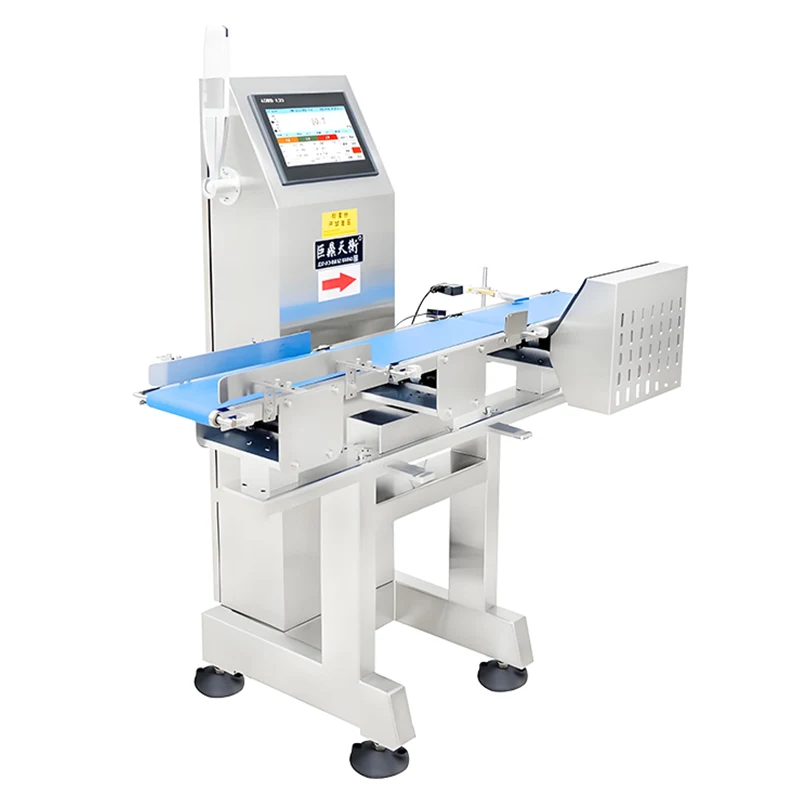
Rejectors are not one-size; the wrong choice dents product or, worse, fails to remove it. My rule is to size the ejection method to pack mass, fragility, and line speed.
- Air blast—fast and gentle for light pouches. Keep an eye on compressed air costs and nozzle alignment.
- Drop gate—clean split between good and bad on trays and small cartons; needs a good catch bin and guarding.
- Pusher/diverter—best for bottles and heavier items; check tip risk on top-heavy formats.
- Retracting belt—excellent for premium fragile packs; higher cost but lowest product damage in my trials.
Whatever you pick, confirm reject confirmation sensors, bin locking, and rejection counters. Auditors love to see you prove that bad packs cannot slip through.
How will installation, validation, and compliance pass an audit?
I plan installations backward from the first audit. That means documented FAT/SAT, calibration certificates, and a validation pack that a new QA tech can follow without coaching.
- Site prep—flat mounting surface, clean power, and cable paths away from VFD noise. I tag these weeks ahead.
- IQ/OQ scripts—install qualification (IQ) proves the hardware landed as specified; operational qualification (OQ) proves it behaves under defined limits.
- Recipe control—locked parameters and role-based logins prevent “cowboy tweaks.” I keep change histories for every SKU.
- Calibration & audit trail—traceable weights, frequency schedules, and printable reports. This is where systems like **Jutian** shine: the reports look clean and auditors finish sooner.
I also stage mock recalls twice per year. Good weight records cut hours off those drills and make cross-functional teams breathe easier.
What does a practical selection workflow look like?
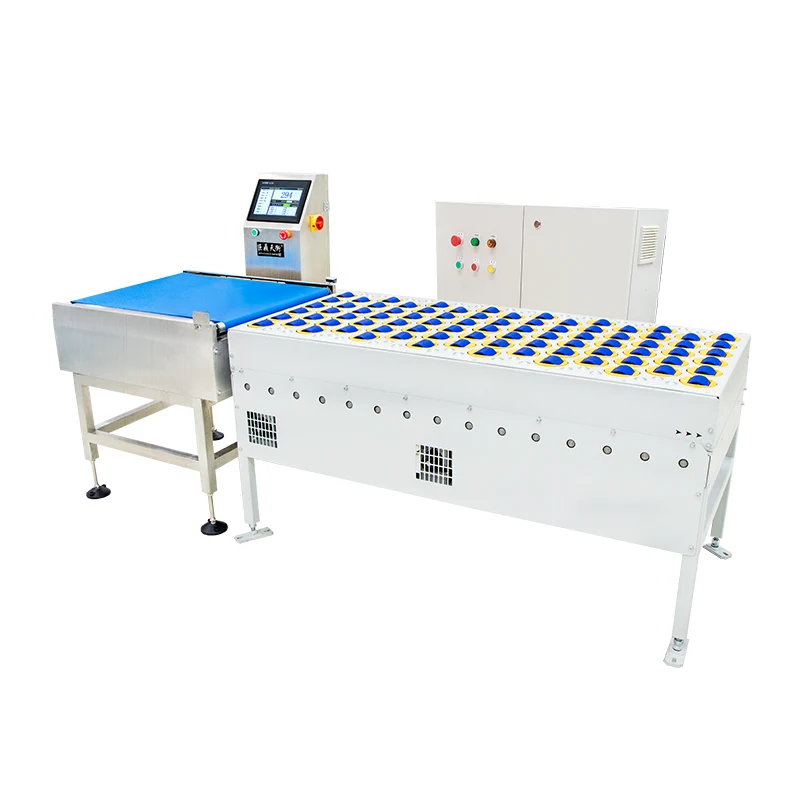
After a few painful purchases earlier in my career, I keep the same checklist on my wall. It is boring. It also works.
- Define the problem in money—put a number on giveaway, rework, and audit risk; set a payback target.
- Map products and speeds—light pouches versus rigid bottles behave differently; list max/min weights and dimensions.
- Audit the environment—temperature swings, sanitation needs, and upstream equipment vibration inform frame choice.
- Insist on a live demo—bring your product. If performance misses, ask why and repeat with tweaks.
- Validate reporting—export to your MES/ERP and print a sample batch record. If IT hates it, fix it now.
- Plan spares and sanitation—belts, photoeyes, quick-release parts; downtime kills ROI faster than any spec.
- Train the crew—operators, QA, and maintenance need different playbooks. Write them before go-live.
Follow that flow, and your chosen Checkweigher Scale will feel less like a gadget and more like a quiet profit center.
What are the most asked questions about a Checkweigher Scale?
Q How accurate can an inline checker be on my line speed?
A In my experience, properly tuned systems deliver sub-gram accuracy on lightweight pouches at 120–180 packs/min and tighter on rigid formats. The key variables are conveyor stability, product spacing, and real-time auto-tare. I always validate with a 30-minute capability run at true speed.
Q Will a checker slow production or create bottlenecks?
A Not if you size the conveyor length, reject type, and acceleration profile to your pack. I’ve run high-speed snack lines without a single bottleneck by pairing air blast with narrow belts and precise timing windows.
Q Can I integrate metal detection and vision in the same frame?
A Yes, and I often do. Combination frames save floor space and improve product tracking to the reject, reducing false rejects. Just verify shielding and signal separation during FAT.
Q How do I handle warm, steamy, or oily products that drift in weight?
A Use stabilization time, recipe-specific filters, and guided infeed rails. For hot bakery items, I add a brief cooldown or staging conveyor to reduce measurement noise before the scale.
Q What about sanitation and wash-down?
A Hygienic frames with open profiles, quick-release belts, and IP-rated enclosures cut cleaning time drastically. On meat lines, I insist on tool-less belt removal and sloped surfaces to avoid harbor points.
Q How do I prove compliance during audits?
A Maintain calibration certificates, locked recipes, audit trails, and batch reports showing weight distribution and rejects. I export PDFs per lot so auditors can sample any day, any SKU, in minutes.
Q When is a pusher better than air blast?
A For heavier bottles, tall or top-heavy formats, and trays where an air blast might pivot the item rather than eject it cleanly. Pushers and diverters give a positive, predictable motion into the reject bin.
Q How quickly does a checker pay for itself?
A On lines with measurable giveaway, my paybacks have ranged from six to twelve months. The fastest wins came from closed-loop filler feedback, where each micro-adjustment avoided grams of overfill across thousands of packs.
conclusion
I am cautious with capital, but a well-matched Checkweigher Scale has never disappointed me when I stuck to the workflow above. It trims overfill, catches underweights before they ship, simplifies audits, and gives production and QA the same single version of truth. If you are considering next steps—or you want eyes on your calculator and line constraints—I’m happy to share what I’ve learned from deploying systems, including my experience with Jutian frames in hygiene-critical environments. Ready to talk through your application? Please contact us with your target SKUs, speeds, and environment, and I’ll map an approach that pays back in real numbers.
Before you reach out, these are the three snapshots I usually ask for: (1) a 24-hour giveaway estimate in grams per pack by SKU, (2) photos or a sketch of the infeed/outfeed and any nearby vibration sources, and (3) your intended data path—local USB dumps or API to MES/ERP. With that, I can propose a narrow set of options, including right-sized rejectors and sanitation features, and show how a Checkweigher Scale will fit your line without headaches. If you want a fast start, just email your details and put “Weight Control Plan” in the subject—let’s get your giveaway trending toward zero. Contact us today and tell me what success looks like on your floor.
Related News
- Technical Features of Weighing Machines.
- Electronic Table Scale Overview.
- The core reason for the price difference in drum checkweighers.
- What is High Speed Checkweigher: How It Works and Why It Matters in Modern Manufacturing
- How Electronic Table Scale Improves Accuracy and Efficiency in Modern Weighing Operations
- How Does an Electronic Weighbridge Improve Industrial Efficiency?
Leave me a message