English
- English
- Español
- Português
- русский
- Français
- 日本語
- Deutsch
- tiếng Việt
- Italiano
- Nederlands
- ภาษาไทย
- Polski
- 한국어
- Svenska
- magyar
- Malay
- বাংলা ভাষার
- Dansk
- Suomi
- हिन्दी
- Pilipino
- Türkçe
- Gaeilge
- العربية
- Indonesia
- Norsk
- تمل
- český
- ελληνικά
- український
- Javanese
- فارسی
- தமிழ்
- తెలుగు
- नेपाली
- Burmese
- български
- ລາວ
- Latine
- Қазақша
- Euskal
- Azərbaycan
- Slovenský jazyk
- Македонски
- Lietuvos
- Eesti Keel
- Română
- Slovenski
- मराठी
- Srpski језик

Why Choose a Non Powered Roller Scale for Efficient and Cost-Effective Weighing?
In modern logistics, warehousing, and production lines, accurate weight measurement is essential for operational efficiency, billing accuracy, and quality control. However, many businesses struggle with high installation costs, complex electrical systems, and frequent maintenance issues caused by powered conveyor weighing systems. A Non Powered Roller Scale offers a practical and economical alternative. Designed for gravity-driven material handling, it combines durability, precision, and simplicity—making it ideal for facilities seeking reliable performance without unnecessary complexity. This article provides a comprehensive guide to understanding, selecting, and implementing a Non Powered Roller Scale to solve real operational challenges and improve workflow efficiency.
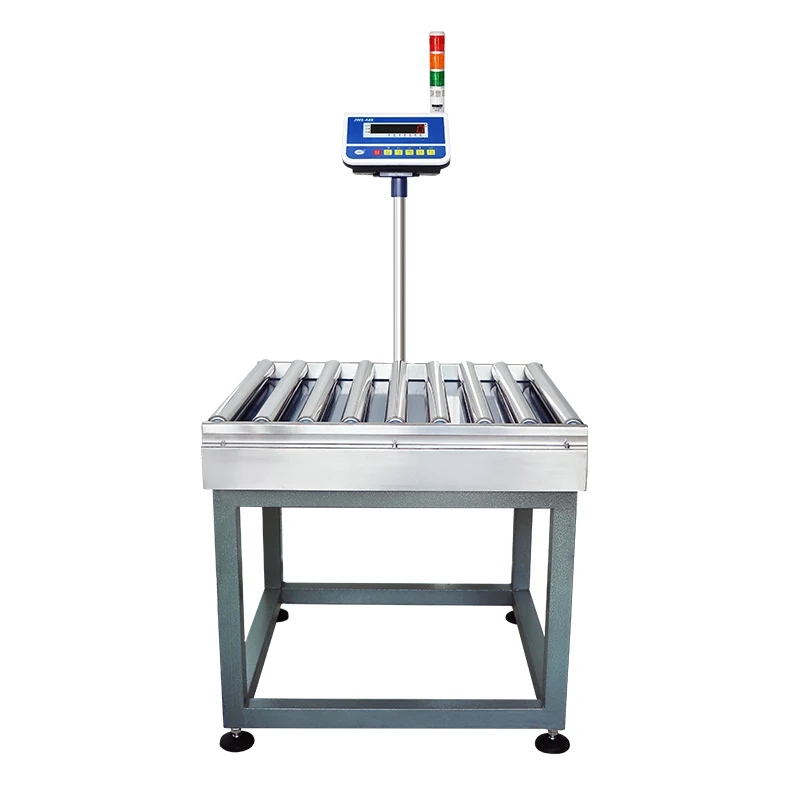
Table of Contents
- What Is a Non Powered Roller Scale?
- Why Are Traditional Powered Systems Costly and Complex?
- How Does a Non Powered Roller Scale Solve Operational Pain Points?
- Which Industries Benefit the Most?
- What Technical Features Should You Evaluate?
- How to Select the Right Model for Your Facility?
- Installation and Maintenance Best Practices
- Cost Analysis and Return on Investment
- Frequently Asked Questions
- Conclusion
1. What Is a Non Powered Roller Scale?
A Non Powered Roller Scale is a weighing system integrated into a gravity roller conveyor. Instead of using motors to drive movement, it relies on manual force or gravity to transport goods across rollers. Embedded load cells capture weight data while products pass over the weighing section.
Unlike motorized conveyor scales, this system does not require electrical drive units. It reduces mechanical complexity while maintaining precise weight measurement. High-quality manufacturers such as Jiangsu Jutian Weighing Equipment Co., Ltd. design these systems with industrial-grade load cells, reinforced frames, and customizable roller spacing for various applications.
2. Why Are Traditional Powered Systems Costly and Complex?
Many facilities invest in powered conveyor scales only to encounter recurring challenges:
- High upfront investment in motors and electrical components
- Frequent maintenance of drive systems
- Downtime caused by motor or gearbox failure
- Complex installation requiring electrical wiring
- Increased energy consumption
For operations that do not require automated transport, powered systems can be unnecessarily expensive. Businesses seeking simplicity and lower operating costs often find non powered solutions more aligned with their needs.
3. How Does a Non Powered Roller Scale Solve Operational Pain Points?
A Non Powered Roller Scale directly addresses common operational frustrations:
| Customer Pain Point | Non Powered Solution | Result |
|---|---|---|
| High energy costs | No motor required | Lower operating expenses |
| Frequent breakdowns | Simplified mechanical structure | Reduced downtime |
| Complicated installation | Modular gravity-based design | Faster deployment |
| Maintenance burden | Minimal moving parts | Lower maintenance cost |
By eliminating powered drive systems, businesses can achieve reliable weighing performance without sacrificing productivity.
4. Which Industries Benefit the Most?
Non Powered Roller Scales are widely used across industries requiring manual or gravity-based handling:
- Logistics and distribution centers
- E-commerce fulfillment warehouses
- Food and beverage packaging lines
- Pharmaceutical processing facilities
- Manufacturing assembly lines
In facilities where products move downhill or are manually pushed, powered conveyors are unnecessary. This is where solutions from Jiangsu Jutian Weighing Equipment Co., Ltd. deliver exceptional value by combining industrial strength with accurate measurement.
5. What Technical Features Should You Evaluate?
When selecting a Non Powered Roller Scale, evaluate the following specifications:
- Load Capacity: Maximum weight per item
- Accuracy Class: Industrial precision level
- Roller Diameter and Spacing: Suitable for product size
- Material: Stainless steel or carbon steel options
- Indicator Compatibility: Digital display integration
- Environmental Protection: IP-rated load cells
High-quality systems are designed for stability and resistance to vibration. Manufacturers such as Jiangsu Jutian Weighing Equipment Co., Ltd. incorporate advanced load cell technology to ensure consistent readings even in demanding industrial environments.
6. How to Select the Right Model for Your Facility?
Choosing the correct configuration depends on your workflow. Consider these steps:
- Measure product dimensions and weight range
- Evaluate conveyor slope or manual handling method
- Determine required weighing accuracy
- Assess integration with existing systems
- Consult an experienced manufacturer
Customized solutions are often the most efficient. Partnering with Jiangsu Jutian Weighing Equipment Co., Ltd. ensures that design parameters match operational requirements.
7. Installation and Maintenance Best Practices
Proper installation is critical for accurate measurement:
- Ensure level frame alignment
- Avoid vibration sources
- Calibrate using certified test weights
- Perform routine inspection of load cells
Maintenance is minimal compared to powered systems. Routine cleaning and periodic recalibration maintain optimal performance.
8. Cost Analysis and Return on Investment
The financial advantages are significant:
| Factor | Powered Conveyor Scale | Non Powered Roller Scale |
|---|---|---|
| Initial Investment | High | Moderate |
| Energy Cost | Continuous | None |
| Maintenance Frequency | High | Low |
| System Complexity | High | Low |
Over time, the lower maintenance and zero energy consumption significantly reduce total cost of ownership.
9. Frequently Asked Questions
Q1: Is a Non Powered Roller Scale accurate enough for commercial use?
Yes. Industrial-grade load cells provide reliable and repeatable accuracy suitable for logistics and manufacturing applications.
Q2: Can it integrate with digital indicators or ERP systems?
Yes. Modern systems support digital displays, printers, and data output interfaces.
Q3: What maintenance is required?
Routine inspection and calibration ensure long-term performance.
Q4: Is customization available?
Yes. Jiangsu Jutian Weighing Equipment Co., Ltd. offers customized roller spacing, frame materials, and weighing capacities.
10. Conclusion
A Non Powered Roller Scale provides an ideal balance of simplicity, reliability, and cost-efficiency. For operations seeking accurate weighing without complex electrical systems, it offers a practical and sustainable solution. By choosing a trusted manufacturer such as Jiangsu Jutian Weighing Equipment Co., Ltd., businesses can secure durable equipment engineered for long-term performance.
Ready to upgrade your weighing efficiency and reduce operational costs? Contact us today to discuss your project requirements and discover how our customized Non Powered Roller Scale solutions can transform your workflow.
Related News
- Technical Features of Weighing Machines.
- Electronic Table Scale Overview.
- The core reason for the price difference in drum checkweighers.
- What is High Speed Checkweigher: How It Works and Why It Matters in Modern Manufacturing
- How Electronic Table Scale Improves Accuracy and Efficiency in Modern Weighing Operations
- How Does an Electronic Weighbridge Improve Industrial Efficiency?
Leave me a message